


 简体中文
简体中文 English
 русский
 عربى
عربى Español
An interior wall was finished with putty two weeks ago. Now white powder comes off wherever a hand touches the surface. A thin crack has opened above the window frame, and a putty corner has lifted off the concrete. The painter did nothing wrong. The putty formula is the problem: water left before the white cement could hydrate, the polymer level was too low to bind the minerals into a continuous film, and the cellulose ether grade was a poor match for the wall.
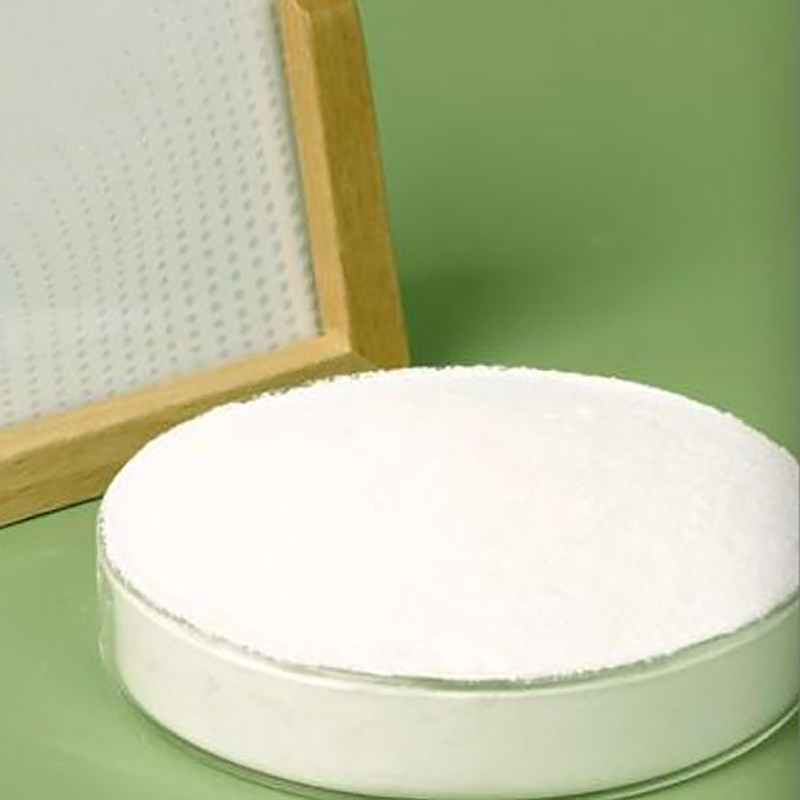
Wall putty powder is the dry-mix material applied between the raw wall and the paint film. It fills micro-cracks, smooths trowel marks, and gives paint a uniform substrate, which reduces paint consumption and hides minor surface defects. For putty manufacturers, the difference between a product that draws complaints and one that earns repeat orders is usually decided by three additives: cellulose ether, redispersible polymer powder, and the balance between them.
Content
- 1 What Goes Into Wall Putty Powder
- 2 Why Water Retention Comes First
- 3 HPMC or HEMC: How to Choose the Cellulose Ether Grade
- 4 RDP: The Polymer Film Behind Adhesion and Flexibility
- 5 Supplier Checks Before You Order in Bulk
- 6 Common Wall Putty Defects and Practical Formula Adjustments
- 7 Frequently Asked Questions About Wall Putty Powder
- 7.1 Q1: What is wall putty powder used for?
- 7.2 Q2: What are the raw materials of wall putty powder?
- 7.3 Q3: How much HPMC should be added to wall putty powder?
- 7.4 Q4: Why does wall putty crack or powder after drying?
- 7.5 Q5: What is the difference between wall putty and gypsum putty?
- 7.6 Q6: Can wall putty be applied over old paint or damp walls?
What Goes Into Wall Putty Powder
Five ingredient groups cover nearly every commercial putty formula. The table below lists them in the order a formulator would normally set.
| Ingredient | Typical proportion | Main function |
|---|---|---|
| White cement (OPC or PSC) | 25 - 35% | Hardness, early strength, basic water resistance |
| Heavy calcium carbonate (600 - 800 mesh) | 55 - 65% | Bulk, smooth texture, sandability |
| Cellulose ether (HPMC or HEMC) | 0.2 - 0.5% | Water retention, thickening, open time |
| Redispersible polymer powder (RDP) | 0.5 - 2.5% | Adhesion, flexibility, film cohesion |
| Optional additives (mica, starch ether, defoamer) | 0 - 0.2% | Sheen, sag control, pinhole reduction |
White cement provides hardness and basic water resistance. A typical share is 25 - 35%: too little cement gives a dusty film, too much raises shrinkage stress and can cause map cracking. Heavy calcium carbonate supplies bulk and the fine texture that makes sanding easy; most plants use 600 - 800 mesh. Mica in small amounts improves sheen and lowers porosity.
Everything else in the recipe controls the interface between cement, water and substrate. These functional additives carry most of the performance risk. For a broader view of how they work inside a binder system, the wall putty binder overview is a useful starting point.
Why Water Retention Comes First
White cement needs water to harden. Porosity, temperature and wind all pull water out of a fresh putty film. If water leaves before the cement hydrates, the surface powders, strength drops, and the next coat has nothing to bond to. Water retention therefore comes first in putty design.
The chart below shows typical filter-paper water retention values for an interior putty formula as HPMC dosage rises. The steep climb from 0.1% to 0.3% explains why minimum formulations fail on absorbent walls and why most machine-applied putties use 0.3 - 0.5%.
Illustrative values based on typical supplier technical data.
Test method matters when comparing values. Filter-paper and vacuum-extraction methods produce different numbers, so compare suppliers only when the same method and temperature were used.
HPMC or HEMC: How to Choose the Cellulose Ether Grade
HPMC and HEMC are the two cellulose ethers that dominate dry-mix putty. Both hold water and thicken the paste, but they differ in gel temperature and in how the fresh film behaves on warm substrates. HEMC has a lower gel temperature and slightly different dissolution, which is why many formulators in warm regions choose HEMC or a blend for a smoother trowel feel. HPMC offers very stable water retention and a wide dissolution window, which simplifies plant-side mixing in cold or warm water.
The line chart below compares water retention of typical architectural grades of both materials in a 0.4% formula over one hour. Both hold water well for the first half hour; HPMC stays a few points higher, which becomes meaningful when a job requires longer open time in hot, dry weather.
Typical lab behavior at 23°C, 0.4% addition, filter-paper method.
A practical first rule: choose architectural-grade HPMC when consistency and low technical risk matter most.
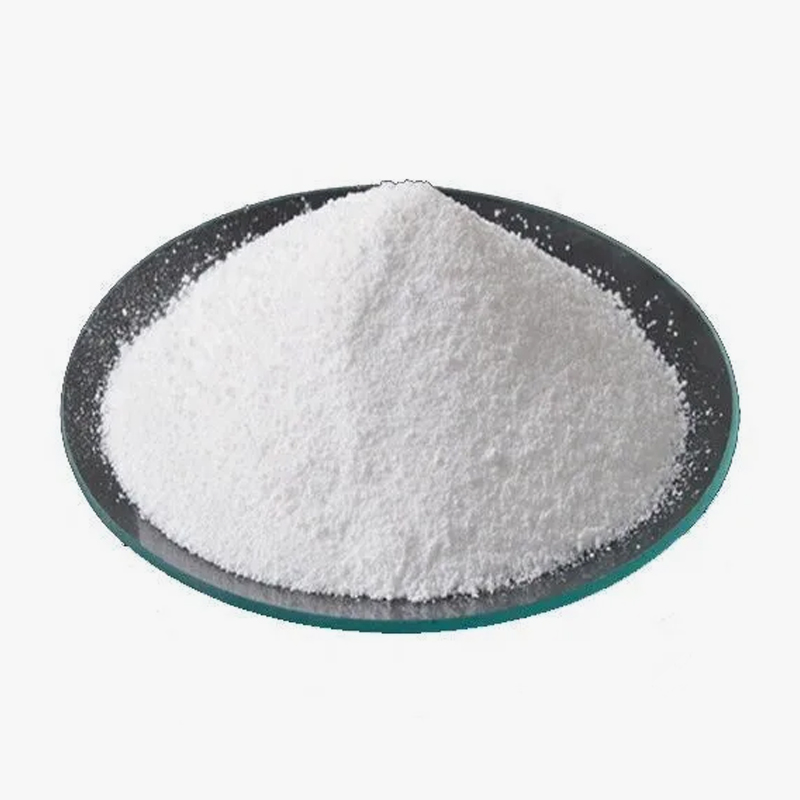 Hydroxypropyl Methyl Cellulose For Adhesive, For Building Material ManufacturersZhejiang Yisheng New Material Co., Ltd is a China hydroxypropyl methyl cellulose for adhesive manufacturers and hydroxypropyl methyl cell...View Product →
Choose building-material-grade HEMC when you are tuning specifically for warm-weather application or a different trowel feel, then verify the decision with a water retention test at your maximum application temperature.
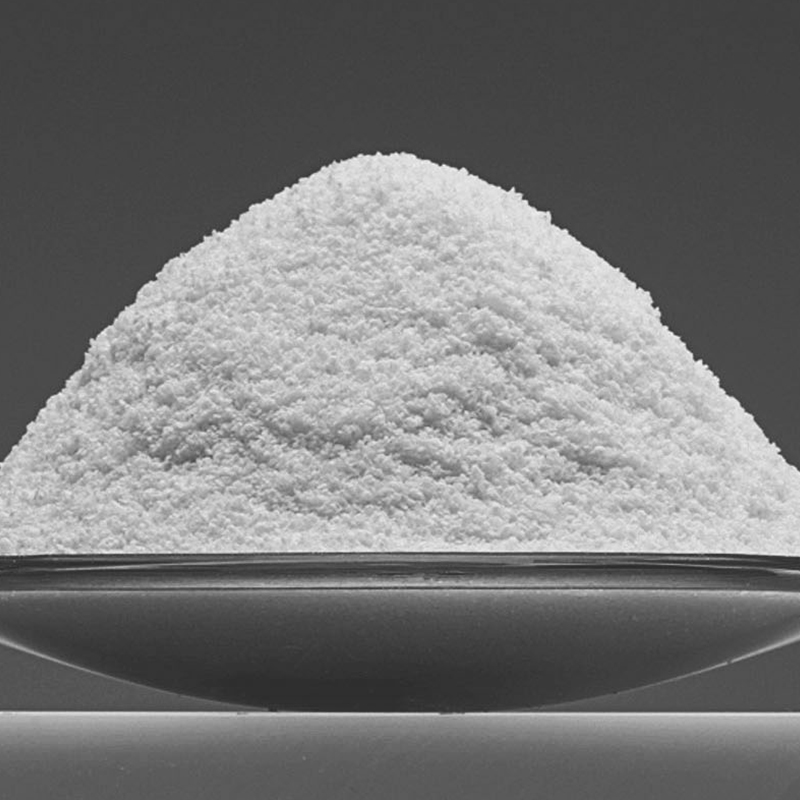 Hydroxyethyl Methyl Cellulose For Building Material Grade Manufacturers, FactoryZhejiang Yisheng New Material Co., Ltd is a China hydroxyethyl methyl cellulose for building material grade manufacturers and HEMC for bu...View Product →
HEC belongs to the same family, but it fits liquid paints and personal care better than dry-mix putty because its dissolution and gel behavior are harder to control in powder form.
RDP: The Polymer Film Behind Adhesion and Flexibility
RDP is a spray-dried emulsion. When putty is mixed with water, it re-disperses into polymer particles that coalesce into a latex film as the layer dries. That film bridges mineral particles and provides the flexible bond cement cannot generate on its own.
At 0.5 - 1.5% RDP, adhesion to concrete and old render improves and edge cracking drops. At 1.5 - 2.5%, the film gains water resistance and flexibility, which is why exterior and renovation putties sit in this range. Above about 2.5%, cost rises faster than performance.
When tuning a formula, fix the cement-to-carbonate ratio first, then adjust cellulose ether for open time and RDP for final film performance. Changing both variables at once makes lab results impossible to interpret.
Judge RDP by film formation: cast a small film, dry it, then check flexibility and wet-rub resistance. A redispersible polymer powder that performs consistently across production lots is what keeps a putty line stable.
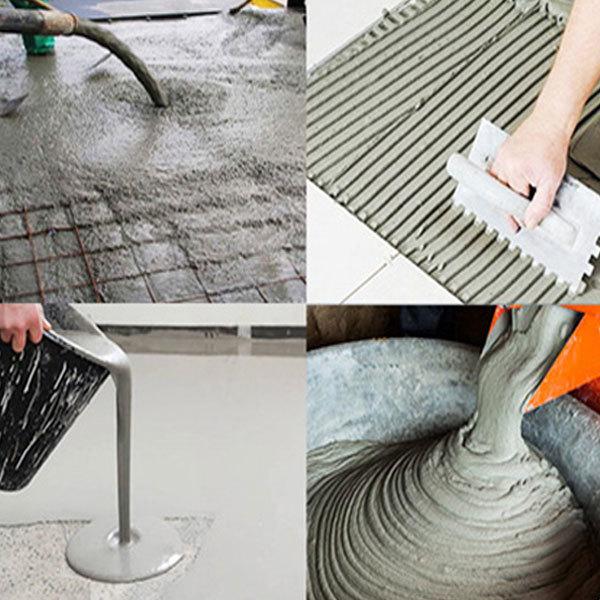 Resin Dispersible Powder (RDP) Manufacturers, Factory - Zhejiang Yisheng New MatZhejiang Yisheng New Material Co., Ltd is a China Resin Dispersible Powder (RDP) manufacturers and Resin Dispersible Powder (RDP) factory...View Product →
Supplier Checks Before You Order in Bulk
Container-load buying of putty additives is a technical decision, not only a commercial one. Four checks prevent most supply problems:
- Ask for water retention data, not only viscosity. Viscosity tells you how thick the paste feels; water retention tells you how the paste behaves on a real wall.
- Ask for the gel temperature. A low gel point makes mixing easier in cold water but can behave differently on warm substrate, so the value must match your climate.
- Check particle size and bulk density. Ultra-fine powder dissolves fast but tends to clump in automatic dosing equipment.
- Ask about storage stability. Cellulose ether and RDP are hydrophilic; once a bag is opened, humidity will change their performance within weeks.
A specialist cellulose ether manufacturer should provide specification sheets, application guidance, and a production-scale trial batch. Hesitation on any of these points is already a signal.
Common Wall Putty Defects and Practical Formula Adjustments
Most putty complaints trace back to a short list of causes. The list below matches the symptom to the most likely additive issue.
- Powdering surface: raise the cellulose ether dosage or switch to a higher-water-retention grade; confirm the cement share stays within 25 - 35%.
- Cracks after drying: add or increase RDP; keep the wet film under about 3 mm and let the first coat dry before the second.
- Pinholes and bubbles: rest the mixed paste for 5 - 10 minutes before use, and add a powder defoamer if the bubbles persist.
- Hollow areas and weak adhesion: increase RDP, improve surface preparation, and verify the cellulose ether batch because a low-viscosity batch reduces the paste body.
- Sagging on vertical surfaces: raise paste viscosity with a higher-viscosity cellulose ether or a slightly higher dosage.
The isometric view below shows the system you are designing for: a rough concrete substrate, a putty film of only 1 - 3 mm, and the decorative coating on top. Additives decide whether that thin film stays dense, adherent and crack-free.
Exploded isometric view, not to scale.
Frequently Asked Questions About Wall Putty Powder
Q1: What is wall putty powder used for?
Wall putty powder smoothes interior and exterior walls before painting, filling cracks and small damage and creating an even base that improves paint coverage and paint film adhesion.
Q2: What are the raw materials of wall putty powder?
The main raw materials are white cement, heavy calcium carbonate, a cellulose ether such as HPMC or HEMC, and usually redispersible polymer powder, plus optional mica or starch ether in small amounts.
Q3: How much HPMC should be added to wall putty powder?
Typical dosage is 0.2 - 0.5% of dry weight. The exact level depends on substrate absorption, application method and site temperature.
Q4: Why does wall putty crack or powder after drying?
The usual causes are low water retention, insufficient cement, an RDP level too low for the substrate, or a wet film applied too thick in hot or windy conditions.
Q5: What is the difference between wall putty and gypsum putty?
Wall putty is cement-based, harder and more water-resistant. Gypsum putty sets faster and is easier to sand but is moisture-sensitive and normally limited to interior use.
Q6: Can wall putty be applied over old paint or damp walls?
Over old but sound paint, light sanding plus a primer is usually enough. Damp walls must be solved at the moisture source; putty cannot repair rising damp.



 Email: sarah@ys-cellulose.com
 Phone: +86-18067879812 / +86-575-82966958


