


 简体中文
简体中文 English
 русский
 عربى
عربى Español
Eight weeks ago you spread gypsum over that heavy clay patch where water always pools. The grass is the same, the puddle is the same, and you are starting to think the bag was a waste of money. Hold that thought. Gypsum does not work on a single clock. On clay soil it works in months and years; on a construction site, the same mineral works in minutes. The difference is the reaction you are asking it to perform.
Content
- 1 How Long Does Gypsum Take to Work in Clay Soil and Lawns?
- 2 Why Gypsum Works Slowly in Clay Soil
- 3 How Long Does Gypsum Take to Work in Plaster and Construction Materials?
- 4 What Controls the Setting Time of Gypsum Plaster?
- 5 Gypsum Product Timelines at a Glance
- 6 Common Application Mistakes That Delay Results
- 7 Frequently Asked Questions About Gypsum
How Long Does Gypsum Take to Work in Clay Soil and Lawns?
Expect the first visible change in drainage within 4 to 12 weeks. Larger improvements in clay structure usually take 3 to 6 months, and a full transformation of a tight clay profile can take 2 to 3 years of repeated application and rainfall. These ranges come from gardener and soil-testing experience rather than a lab specification, because field conditions vary so much.
Maximum typical time to each visible stage in heavy clay.
A quick jar test can mislead you. Put a spoonful of gypsum in a jar of muddy water, wait 5 to 10 minutes, and you will see particles clump and sink faster. In about 30 minutes the water clears. This proves the chemical reaction works, but a soil profile is not a jar. The reaction needs continuous moisture, good contact between gypsum and clay particles, and wet-dry cycles to rebuild structure.
Why Gypsum Works Slowly in Clay Soil
Gypsum delivers calcium ions to the clay. Calcium replaces excess sodium on the surface of clay particles, and the particles are then able to flocculate into larger aggregates. Those aggregates create the pore spaces that allow water and roots to move down. The process is slow for three clear reasons. First, gypsum must dissolve, and in dry soil it barely dissolves. Second, the exchange happens at the contact point between particles, so a large clay mass requires a long time for the reaction to spread. Third, the new aggregates are fragile until organic matter and root activity stabilise them.
Granular gypsum slows things down further because it waits for moisture to break it apart. Liquid gypsum reacts faster on the surface, but it cannot fix a compacted low-organic-matter subsoil by itself. In a landscaping scenario, gypsum works best as a long-term soil treatment, not a quick fix.
How Long Does Gypsum Take to Work in Plaster and Construction Materials?
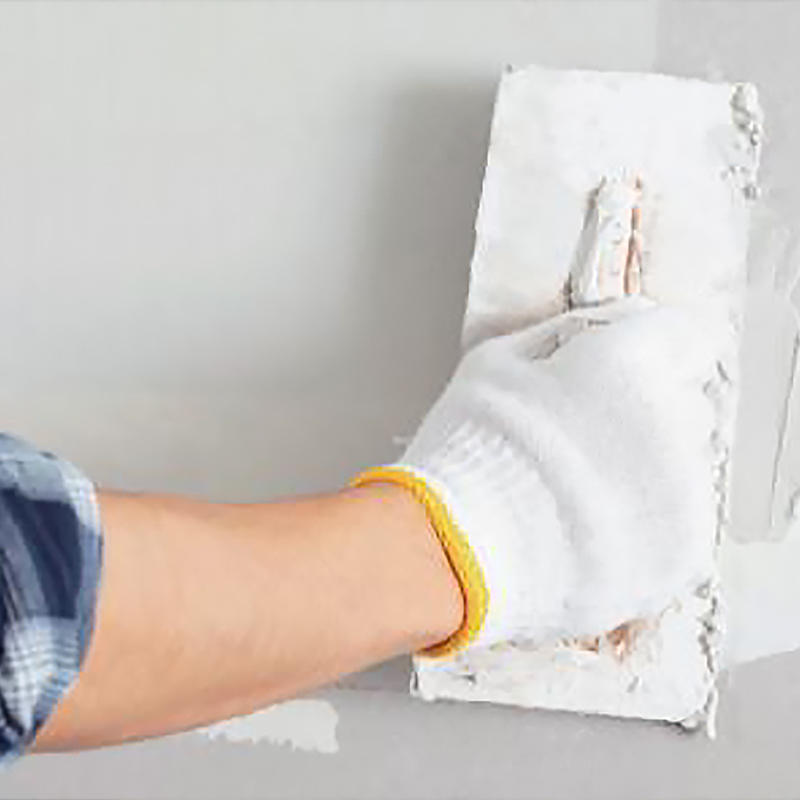
Move from the garden to the building site and the timeline collapses. A gypsum plaster mix starts to firm within tens of minutes of being trowelled on. A typical interior skim coat begins to set within 20 to 40 minutes, becomes firm within about an hour, and dries enough for light sanding within 24 hours. Thick undercoats can take several days to reach full hardness, but the material is actively working during every minute of that period.
Typical setting sequence for a gypsum plaster coat.
Because the set time is so short, construction-grade gypsum products are designed around precise working windows. That is why gypsum plaster additives exist: to control the balance between setting speed and workability.
What Controls the Setting Time of Gypsum Plaster?
The main variables are water-to-powder ratio, temperature, humidity, plaster type, and chemical additives. Too little water makes the mix stiff and may trigger flash set. Too much water weakens the final surface and lengthens the drying time. Warm rooms accelerate setting; cold rooms and high humidity slow it down.
To make the practical window large enough for professional application, formulators use cellulose ethers. Building-grade HEMC is widely used in gypsum plasters for its water-retention and anti-sagging performance. It keeps the water in the mix so the plaster does not dry out before the hydration reaction finishes. Architectural-grade HPMC plays a similar role, adding viscosity stability in formulations that need a longer open time.
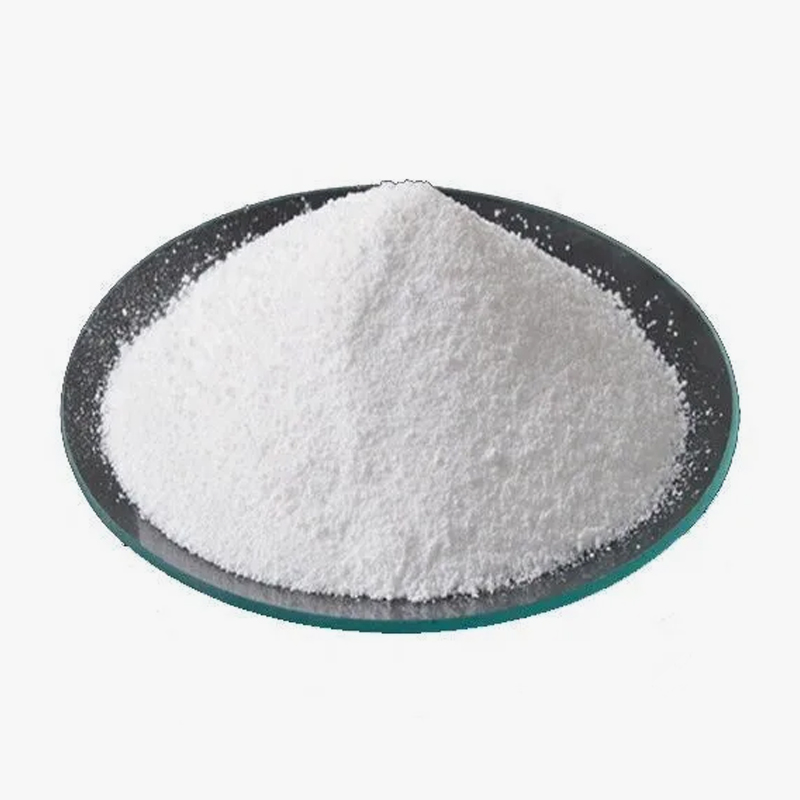 Hydroxypropyl Methyl Cellulose For Adhesive, For Building Material ManufacturersZhejiang Yisheng New Material Co., Ltd is a China hydroxypropyl methyl cellulose for adhesive manufacturers and hydroxypropyl methyl cell...View Product →
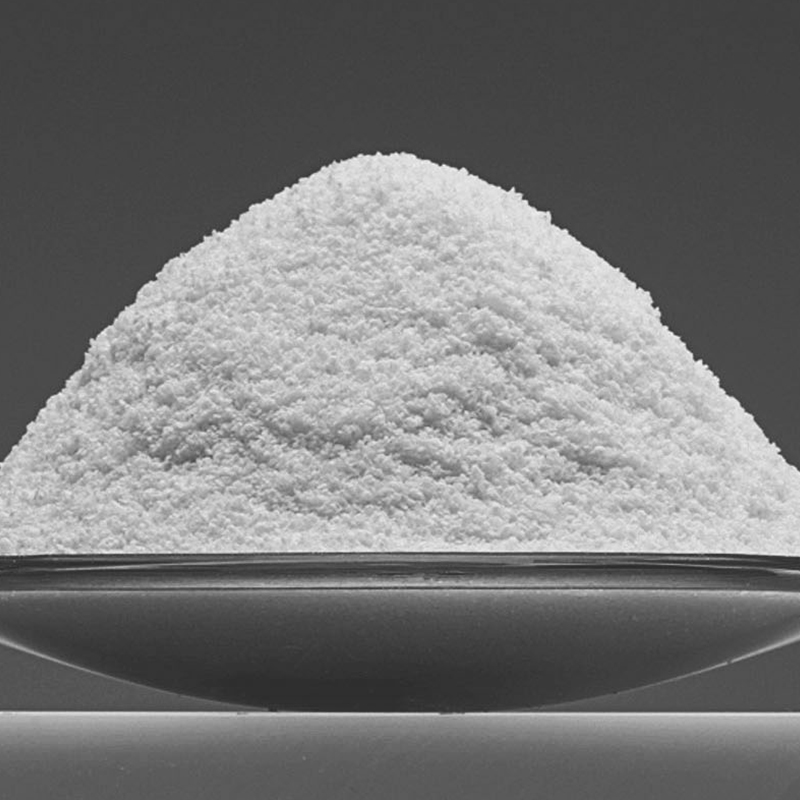 Hydroxyethyl Methyl Cellulose For Building Material Grade Manufacturers, FactoryZhejiang Yisheng New Material Co., Ltd is a China hydroxyethyl methyl cellulose for building material grade manufacturers and HEMC for bu...View Product →
When you are selecting raw materials, it helps to look at how HEMC behaves in cement, gypsum, and lime systems. The same polymer chemistry that slows water loss also influences the set time and final adhesion.
Gypsum Product Timelines at a Glance
| Product type | Typical action time | Best use case |
|---|---|---|
| Granular gypsum for soil | 2–3 months to 2–3 years | Lawn and garden clay improvement |
| Powdered gypsum for soil | 4–8 weeks for surface response | Garden beds and small areas |
| Liquid gypsum | 2–4 weeks for visible change | Quick surface flocculation |
| Gypsum plaster | 20–60 minutes set; 24 hours dry | Interior walls, ceilings, repairs |
| Gypsum self-leveling compound | 2–4 hours walkable; 24 hours for coating | Floor leveling |
Common Application Mistakes That Delay Results
- Applying gypsum to compacted clay without aerating first: aeration creates the channels gypsum needs.
- Expecting gypsum to change pH: it is neutral, so it will not fix acidity.
- Using gypsum where sodium is not the problem: if your soil test shows low sodium and high calcium, gypsum will do little.
- Spreading granules over dry clay and skipping the watering: no water means no reaction.
- Mixing plaster by eye and hoping for a reliable set time: consistent proportions are the real control.
Frequently Asked Questions About Gypsum
How long does gypsum take to work on clay soil?
Usually 1 to 3 months for surface changes, and up to 2–3 years for deep structural improvement.
How long does liquid gypsum take to work?
It can show a faster surface response in 2 to 4 weeks, but it still needs wet-dry cycles to rebuild structure.
How much gypsum do I need for my lawn?
About 10 to 20 lb per 100 sq ft per application is a common starting rate, but always follow a soil test.
Does gypsum lower soil pH?
No. Gypsum is pH-neutral and does not change soil acidity; use lime if you need to raise pH.
Can I apply gypsum and fertilizer together?
Yes, in separate passes. Gypsum is not a fertilizer, but it can be part of the same soil-improvement program.
How long does gypsum plaster take to dry?
Skim coats dry in about 24 hours; thicker undercoats can need 3 to 7 days before full hardness.


 Email: sarah@ys-cellulose.com
 Phone: +86-18067879812 / +86-575-82966958


