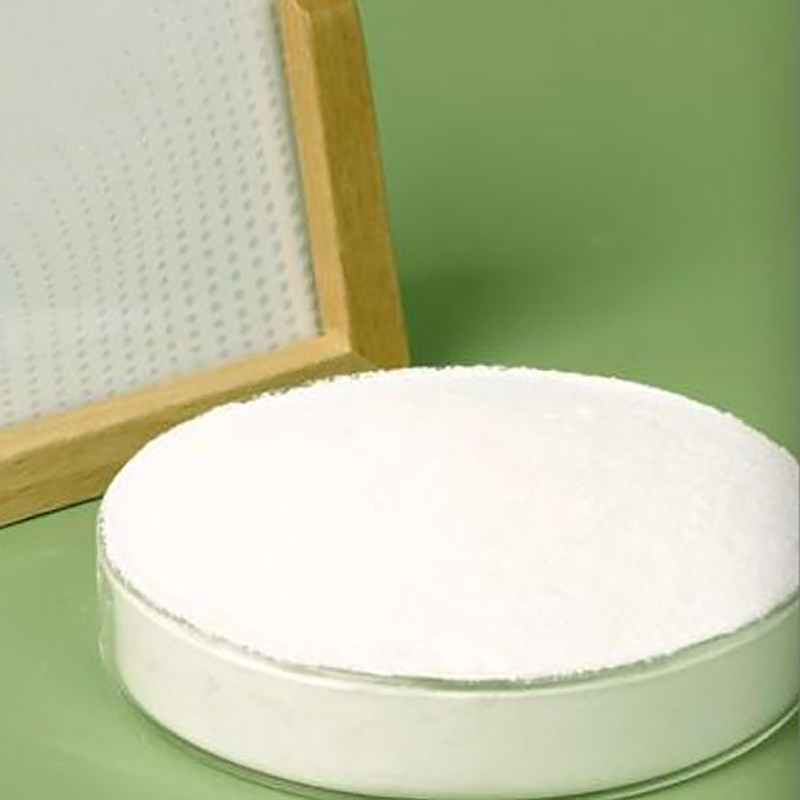
Resin Dispersing Powder (RDP) is a new type of powdered dispersant primarily used to improve the dispersibility and stability of resins in water-based and powder coatings. Due to its high-efficiency dispersion performance, environmental friendliness, and ease of use, RDP is widely used in the coatings, inks, and adhesives industries. This article will provide a detailed introduction to the properties, main uses, application methods, and common issues of RDP.
1. Main Characteristics of RDP
Resin dispersing powder has the following characteristics:
Excellent dispersibility: It can quickly disperse resin particles in water-based systems, improving uniformity.
Environmentally friendly and non-toxic: Non-solvent based, reducing VOC emissions and meeting environmental standards.
Improved rheological properties: Enhances the fluidity and application performance of coatings and inks.
Easy to use: The powder form is easy to store, weigh, and use, requiring no additional solvents.
Strong stability: Maintains stable dispersion under various pH ranges and temperatures.
2. Main Application Areas of RDP
RDP is widely used in various industries, mainly including:
| Application Industry |
Function & Effect |
| Water-based Coatings |
Improves resin dispersion, enhances film uniformity, reduces pigment settling, and improves coating smoothness |
| Printing Inks |
Enhances pigment dispersion, improves color intensity and printability |
| Adhesives & Sealants |
Promotes uniform resin distribution, improves bonding strength and curing consistency |
| Construction Materials |
Used in decorative coatings and cement-based coatings to improve workability and surface finish |
| Other Industrial Applications |
Acts as a dispersing aid in composites, plastics, and powder coatings for better resin distribution |
3. Application Methods and Precautions for RDP
Addition method: RDP can be directly added to the water-based system and stirred evenly; in powder coatings, it can be mixed with the resin powder before dispersion.
Dosage control: Depending on the desired dispersion effect and resin type, the general addition amount is 1% to 5% of the resin weight.
Storage conditions: Should be stored in a dry, cool, and well-ventilated environment, avoiding moisture and high temperatures.
Compatibility: RDP has good compatibility with most water-based resins (such as acrylic resins, polyurethanes, epoxy resins), but its applicability should be tested under extreme acid and alkaline conditions.
4. FAQ (Frequently Asked Questions)
Q1: Can RDP be used in all water-based coatings?
A1: RDP is suitable for most water-based coating systems, such as acrylic, polyurethane, and epoxy resins, but compatibility testing is required in strong acid or strong alkaline environments.
Q2: Will RDP affect the drying time of the coating?
A2: Generally, it will not significantly affect the drying time, but it may slightly improve the flatness of the coating film, resulting in more even surface drying.
Q3: How to prevent RDP from getting damp and clumping? A3: Store in a dry, sealed container and avoid high temperatures. If slight clumping occurs before use, gently stir the powder to disperse it.
Q4: How is the amount of RDP to be added determined?
A4: It is determined based on the type of resin, coating concentration, and dispersion requirements. A general recommended addition amount is 1% to 5% of the resin weight. The optimal amount can be determined through small-scale testing.
Q5: Is RDP suitable for powder coatings?
A5: Yes, RDP can be mixed with resin powder in powder coatings to improve dispersion and uniformity, and enhance film smoothness.
Q6: Is RDP environmentally friendly?
A6: RDP is a non-solvent powder dispersant with low VOC emissions, meeting environmental requirements and suitable for green coatings and environmentally friendly adhesives.



 简体中文
简体中文 English
 русский
 عربى
عربى Español
 Email: sarah@ys-cellulose.com
 Phone: +86-18067879812


