


 简体中文
 English
 русский
 عربى
 Español

A 55% PVC exterior acrylic can be brought to 100 KU with two different HEC grades and still behave like two different paints. One holds a 300 µm wet film on a vertical panel; the other sags. Both powders arrive with a valid certificate of analysis, and both are sold as "HEC for water-based coatings". What separates them is molecular weight, the viscosity basis printed on the data sheet, and how the powder was dissolved.
The conclusion first: in architectural latex coatings, HEC is a targeted rheology tool, not a bulk filler. It delivers low-shear viscosity for sag control and anti-settling, water retention during drying, and long-term pigment suspension. Dose it to meet those three targets at the lowest workable level, because every extra fraction of a percent buys more structure and costs gloss, flow and, at high loading, water resistance.
Content
- 1 What HEC Does in the Aqueous Phase of a Latex Coating
- 2 Reading an HEC Grade Specification
- 3 Setting Dosage: The KU and ICI Balance
- 4 Dissolving HEC Without Lumps
- 5 Formulation Problems and Practical Fixes
- 6 What to Confirm Before You Order
- 7 FAQ: HEC in Architectural Latex Coatings
- 7.1 Q1. What is HEC used for in architectural latex coatings?
- 7.2 Q2. What dosage of HEC should I start with?
- 7.3 Q3. HEC or HEMC for exterior acrylic paint?
- 7.4 Q4. Why does HEC form lumps or fisheyes?
- 7.5 Q5. How do I raise ICI viscosity without pushing KU too high?
- 7.6 Q6. Does HEC affect water resistance or VOC content?
What HEC Does in the Aqueous Phase of a Latex Coating
Hydroxyethyl cellulose is a nonionic cellulose ether. Hydroxyethyl groups grafted onto the cellulose backbone make the polymer cold-water soluble; once dispersed, the chains hydrate, uncoil and entangle, and those entanglement points break down under shear and re-form at rest. That is the origin of the pseudoplastic flow curve formulators rely on: high apparent viscosity at rest, much lower viscosity at application shear.
Because the polymer dissolves in the continuous water phase and does not associate with binder droplets, its effect is weighted heavily toward low shear. It builds the structure that keeps pigment and filler from hard-settling in the can and stops a heavy film from running down a wall, while its contribution at the shear rates reached under a brush or roller stays modest.
Four jobs in one molecule
- Low-shear viscosity: controls sag resistance at high wet film build and slows hard settling of dense fillers such as calcium carbonate and talc.
- Water retention: keeps water in the film long enough for coalescence, which matters most on porous substrates and in exterior systems applied in warm, moving air.
- Pigment suspension: stabilises the millbase and let-down through storage and freeze-thaw cycling.
- Electrolyte and pH tolerance: as a nonionic ether it stays functional across the pH range of acrylic, styrene-acrylic and vinyl-acetate-ethylene emulsions.
What HEC does not do is bind. It is a minor component of the dried film, and much above 1% on total formula it begins to raise the film's sensitivity to water and to pull gloss down.
| Thickener chemistry | Mechanism | Low-shear (KU) effect | High-shear (ICI) effect | Water resistance | Usual role |
|---|---|---|---|---|---|
| HEC | Chain entanglement in the water phase | High | Low to moderate | Slightly negative at high dose | Primary KU builder, anti-settling, water retention |
| HEMC / HPMC | Water-phase thickening, partly surface active | High | Low | Similar to HEC | KU builder where different gel point or retention is needed |
| ASE / HASE | pH-triggered swelling of a dispersed polymer | Low | Moderate to high | Neutral to positive | ICI and flow, added after pH adjustment |
| HEUR | Associative bridging with binder and pigment | Low | High | Positive | ICI, levelling and flow in low-VOC systems |
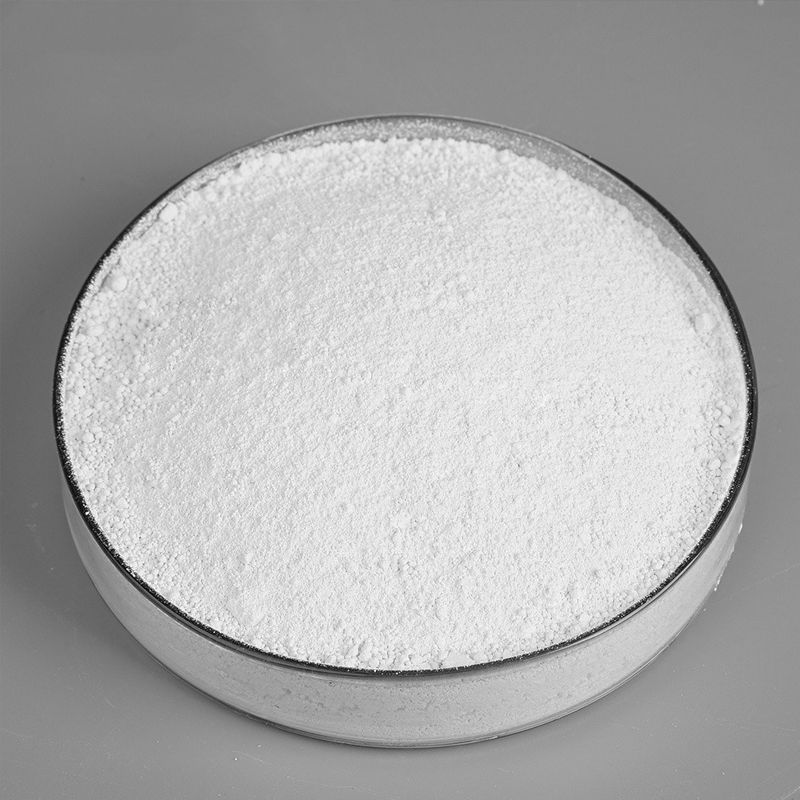 EASONZELL HEC Series Water-Based Coatings ThickenerHydroxyethyl cellulose grades for latex and exterior wall paints, with viscosity ranges and technical metrics to compare when selecting a water-based coating thickener.View Product →
Reading an HEC Grade Specification
Three parameters on a data sheet decide most of the coating behaviour, and two of them are frequently misread during purchasing.
- Molar substitution. Most coating grades sit between roughly 1.8 and 2.5. Higher substitution improves water solubility and tolerance to electrolytes; lower substitution shifts the gel point and changes how the polymer behaves in warm plant conditions.
- Solution viscosity and its basis. A figure such as 30,000 mPa·s means nothing without concentration, spindle and temperature. A grade measured at 1% is a far heavier polymer than one measured at 2%, so comparing the two numbers directly is one of the most common specification errors in this category.
- Particle form and surface treatment. Delayed-solubility grades, coarse or surface-treated to resist wetting, are designed for dry addition in the let-down. Instant grades hydrate quickly and suit pre-made stock solutions.
Before comparing quotations, ask for the viscosity basis, the substitution range, the screen residue and a clarity description. Those four answers separate a coatings grade from a grade intended for drilling fluids or personal care.
Not every rheology problem calls for HEC. Where a formulator needs stronger water retention at a lower addition level, or a different thermal gel point, HEMC coating grades are evaluated side by side in the same ladder study rather than switched on specification alone.
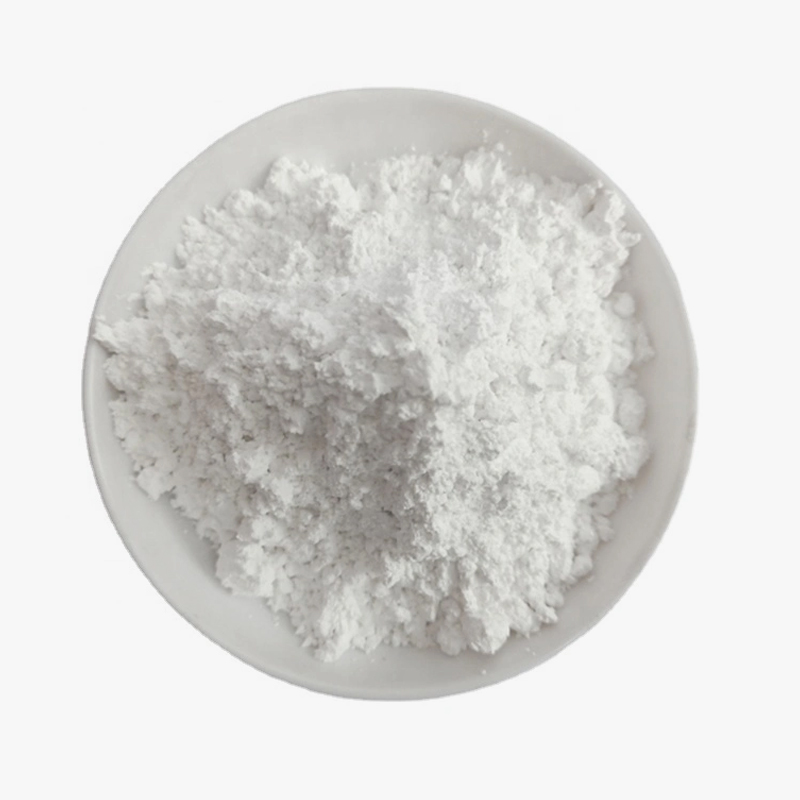 EASONZELL ME Series Coating-Grade HEMCHydroxyethyl methyl cellulose grades with listed viscosities, gel temperature, and water-retention functions for comparing HEMC options in coating rheology studies.View Product →
Setting Dosage: The KU and ICI Balance
Two readings describe a latex coating in the can and on the wall. KU, taken on a Stormer viscometer at low shear, reflects in-can structure and sag resistance. ICI, taken on a cone-plate at roughly 10,000 1/s, reflects what a brush or roller feels. For a typical exterior acrylic emulsion, formulators usually work toward a KU in the high 90s to about 105 and an ICI near 1.0 to 1.5 P, then fine-tune.
HEC is mainly a KU tool. Each additional increment lifts low-shear viscosity steeply and high-shear viscosity only slightly, which is why adding more HEC to fix a low ICI usually overshoots KU, causes roller spatter and lengthens open time. The practical route is to set KU with HEC, then lift ICI with a small amount of an associative polyurethane or HASE co-thickener.
Start with a ladder: hold grind and let-down constant and run four levels of HEC in 0.1% steps across the expected band. Measure KU, ICI, sag at 300 and 500 µm, and 60-degree gloss on a sealed drawdown. The result usually shows a knee, the point where another 0.1% buys a large KU increase and a visible gloss loss. That knee is the working level.
Dissolving HEC Without Lumps
Most HEC complaints from coating plants are dissolution problems, not polymer problems. Lumps that survive dispersion become fisheyes in the film, and partially hydrated polymer delivers neither the viscosity nor the water retention the formula was built around.
- Disperse into water under good agitation, adding powder at the vortex rather than onto the surface, and keep the batch below the gel point, roughly 60 °C for typical HEC grades.
- Choose a delayed-solubility grade when the powder must go into a formula that already contains pigment, so surface hydration does not start before dispersion is complete.
- Allow full hydration before binder addition. Twenty to thirty minutes under slow agitation is a normal working window.
- Add a biocide. Cellulose ether solutions support microbial growth, and a viscosity drop accompanied by a pH shift is often biological rather than chemical.
- For stock solutions, prepare at 1 to 2% solids and dose at the let-down instead of trying to dissolve powder directly in a filled emulsion.
Formulation Problems and Practical Fixes
Defects traced to HEC usually fall into six patterns. The table below maps the symptom to the cause most often found on the plant floor.
| Symptom | Usual cause | Practical correction |
|---|---|---|
| Fisheyes or gel specks in the film | Powder wetted on the liquid surface before dispersion | Add at the vortex, use a delayed grade, screen the stock solution |
| Sagging at high film build | Low-shear structure too low for the applied thickness | Raise HEC or add a low-shear co-thickener; check KU at application solids |
| Hard settling in the can | Insufficient low-shear viscosity or incomplete dispersion | Small HEC increase, longer dispersion, review anti-settling aid |
| Gloss loss in semi-gloss | Excess HEC or undissolved fibres | Reduce addition, check screen residue, consider a lower viscosity grade |
| Roller spatter | KU too high for the shear the applicator generates | Trim HEC and shift part of the target to an associative thickener |
| Early blistering or film whitening | HEC loading above the water-resistance threshold | Reduce addition and re-balance against binder and hydrophobe level |
What to Confirm Before You Order
For a coatings producer, the useful supplier questions are technical, not commercial. A short checklist removes most of the risk from a first order or a grade change.
- Which viscosity basis is used, and at what temperature and spindle speed?
- Is the grade delayed or instant, and what is the particle size distribution?
- What batch-to-batch viscosity tolerance is guaranteed on the certificate?
- Is a retention sample from the production batch available on request?
- Which packing format suits your silo or manual charging arrangement?
Where the application is specifically the coatings line, it helps to review the technical data for HEC for water-based coatings against your current formula before running the ladder. Producers working across primer, topcoat and texture often compare several grades at once, and the wider set of architectural coatings additives puts the cellulose ethers next to the other functional components of the same system.
FAQ: HEC in Architectural Latex Coatings
Q1. What is HEC used for in architectural latex coatings?
It thickens the water phase, not the binder. That delivers sag resistance at high film build, keeps pigment and filler suspended during storage, and holds water in the film long enough for the binder to coalesce on porous substrates.
Q2. What dosage of HEC should I start with?
Most architectural emulsions begin between 0.3% and 0.8% on total wet paint weight, with textured products at the upper end. Confirm with a ladder study in 0.1% steps and pick the level that meets KU and sag targets with the least gloss loss.
Q3. HEC or HEMC for exterior acrylic paint?
Both work. HEC is the common default: nonionic, tolerant of pH and electrolytes, and predictable at low shear. HEMC is evaluated when a formulator needs different water retention or a different gel point. Test both in the same formula.
Q4. Why does HEC form lumps or fisheyes?
Powder that wets on the liquid surface hydrates as a skin and never disperses. Add at the vortex, use a delayed-solubility grade, keep the batch below about 60 °C, and allow full hydration before binder goes in.
Q5. How do I raise ICI viscosity without pushing KU too high?
Set KU with HEC, then lift ICI with a small amount of an associative polyurethane or HASE thickener. Additional HEC raises KU steeply and ICI only slightly, and it tends to cause spatter and slow levelling.
Q6. Does HEC affect water resistance or VOC content?
HEC is a solid polymer and adds no VOC. Above roughly 1% on total formula it can increase the dried film's sensitivity to water, so keep the level at the minimum that meets the rheology target and check exterior exposure performance.
Architectural latex coatings tolerate many substitutions but not a mismatched rheology modifier. Fix the grade by molecular weight and substitution, fix the addition level with a four-step ladder, and fix the dispersion before blaming the polymer. Zhejiang Yisheng New Material produces EASONZELL HEC series grades for water-based coatings at its Shangyu base, alongside the HEMC, HPMC, starch ether and redispersible powder lines used across the same architectural systems, with technical data and samples available for evaluation against a running formula.

 Email: sarah@ys-cellulose.com
 Phone: +86-18067879812 / +86-575-82966958


