


 简体中文
简体中文 English
 русский
 عربى
عربى Español
Content
- 1 What Is HPMC? A Direct Answer
- 2 How HPMC Is Manufactured
- 3 Why HPMC Viscosity Grades Matter for Mortar Performance
- 4 HPMC Water Retention Agent: How Dosage Affects Performance
- 5 Recommended HPMC Dosage Guide for Dry Mix Mortar
- 6 HPMC For Tile Adhesive: Performance Comparison
- 7 HPMC For Wall Putty and Plastering Mortar
- 8 HPMC For Self Leveling Mortar Systems
- 9 Hydroxypropyl Methyl Cellulose for Adhesive Formulations Beyond Tiles
- 10 Choosing an HPMC Manufacturer in China
- 11 Environmental and Handling Considerations
- 12 Frequently Asked Questions
- 12.1 Q1: What is Hydroxypropyl Methyl Cellulose (HPMC)?
- 12.2 Q2: What is HPMC used for in construction?
- 12.3 Q3: Is HPMC soluble in water?
- 12.4 Q4: How is HPMC manufactured?
- 12.5 Q5: Is HPMC environmentally friendly?
- 12.6 Q6: What dosage of HPMC is recommended for tile adhesive?
- 12.7 Q7: Can HPMC be used in self-leveling mortar?
- 12.8 Q8: How does viscosity affect HPMC performance?
What Is HPMC? A Direct Answer
Hydroxypropyl Methyl Cellulose, commonly known as HPMC, is a non-ionic cellulose ether derived from natural cellulose through a controlled etherification process. In construction, HPMC is primarily used as a water retention agent, thickener, and binder enhancer for cement-based and gypsum-based products. It is widely added to tile adhesives, wall putty, dry mix mortar, self-leveling mortar, and external insulation systems to improve workability, open time, and bonding strength.
For anyone searching for Hydroxypropyl methyl cellulose for building material applications, the short answer is that HPMC functions as a multi-purpose additive: it slows down water evaporation from fresh mortar, improves consistency, reduces sagging on vertical surfaces, and makes the final mixture easier to apply with a trowel or spray equipment. The remainder of this guide explains how HPMC works, how it is produced, how much should be used, and how to evaluate suppliers.
How HPMC Is Manufactured
HPMC production starts with refined cellulose, usually sourced from cotton linters or wood pulp. The cellulose is treated with an alkali solution to swell the fiber structure, making it more reactive. It is then reacted with propylene oxide and methyl chloride under controlled temperature and pressure, a process known as etherification. This step introduces hydroxypropyl and methyl groups onto the cellulose backbone, which is what gives HPMC its water solubility and thickening behavior.
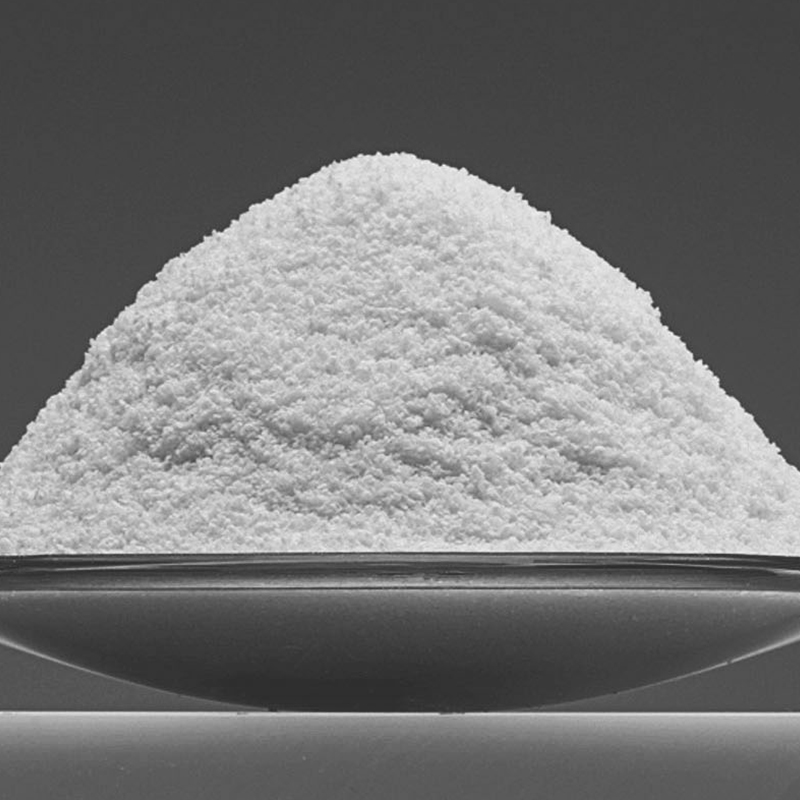
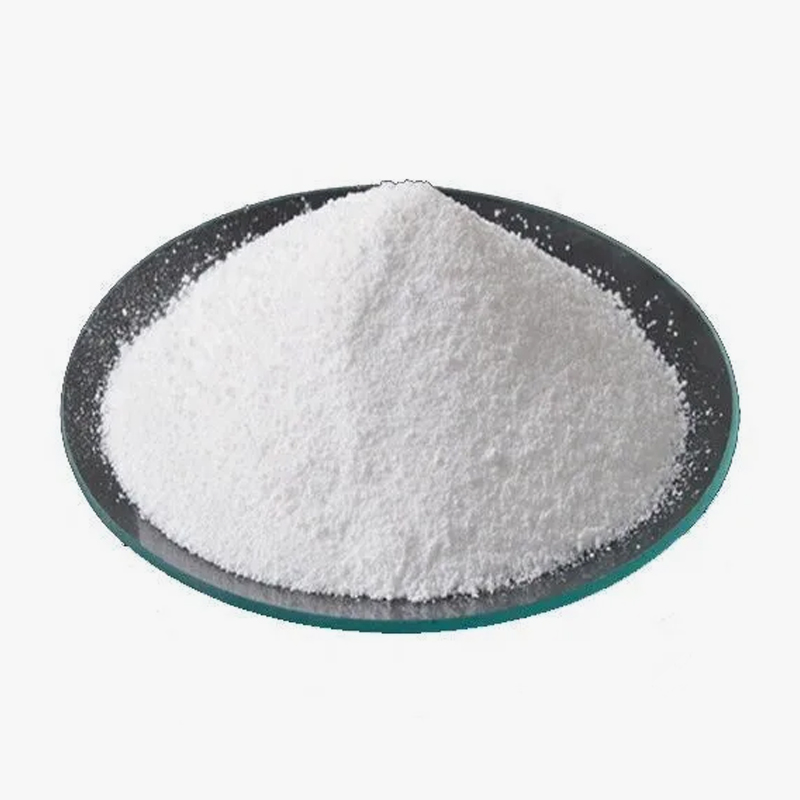
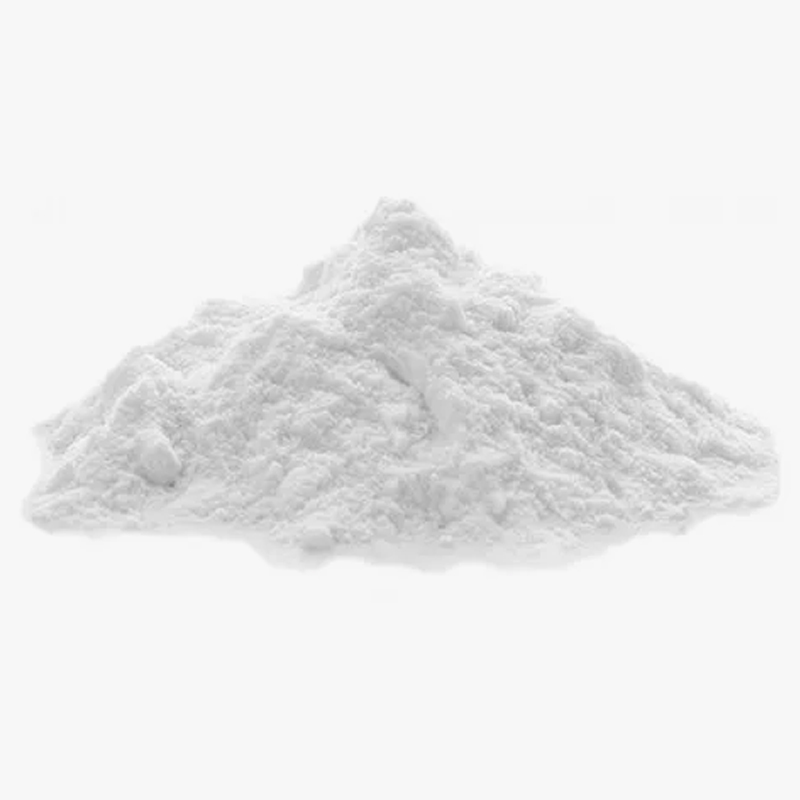
After the reaction stage, the material is washed to remove byproducts and salts, then dried and ground into a fine powder. The particle size, degree of substitution, and viscosity grade are all adjusted at this stage to match different end uses. A manufacturer producing Construction Grade HPMC will typically offer several viscosity ranges, since mortar formulators select different grades depending on whether the product is used for tile adhesive, plastering, or self-leveling compounds.
- Raw material preparation: cellulose pulp is purified and pretreated with alkali
- Etherification: reaction with propylene oxide and methyl chloride under heat and pressure
- Washing and purification: removal of salts and reaction byproducts
- Drying and milling: powder is dried and ground to the required particle size
- Quality testing: viscosity, moisture content, and ash content are checked before packing
Why HPMC Viscosity Grades Matter for Mortar Performance
Viscosity is one of the most important specifications when selecting HPMC for any mortar application. Higher viscosity generally means stronger water retention and thickening, but it can also slow down dissolution time if particle size is not properly modified. High Viscosity HPMC grades, typically above 60,000 cP, are favored for applications where extended open time and strong sag resistance are required, such as ceramic tile adhesive on vertical walls.
The chart below illustrates typical viscosity ranges across four common HPMC grades used in dry mix mortar production. These ranges are measured using a rotational viscometer on a 2 percent aqueous solution at 20 degrees Celsius, which is the standard testing method referenced across the industry. Formulators often blend grades to fine-tune both viscosity and dissolution speed for a specific production line.
As shown above, low viscosity HPMC is generally suited for self-leveling compounds where flowability is the priority, while medium and high viscosity grades dominate tile adhesive and wall putty formulations. Ultra-high viscosity HPMC is used sparingly, often blended with other grades, because excessive viscosity can make the mortar feel sticky during application. Choosing the correct grade is the first decision point for any formulator working with Hydroxypropyl Methyl Cellulose For Mortar systems.
HPMC Water Retention Agent: How Dosage Affects Performance
As a HPMC Water Retention Agent, the cellulose ether forms a thin film around water molecules and slows their migration into porous substrates such as brick, concrete block, or aerated concrete panels. This delayed evaporation gives the cement enough time to hydrate properly, which directly affects bond strength and reduces cracking risk in the cured mortar.
The line chart below shows a representative relationship between HPMC dosage and water retention rate in a standard cement mortar mix. At very low dosage levels, water retention improves quickly, but the curve flattens out once the dosage passes a certain threshold, meaning that adding more HPMC beyond that point brings diminishing returns. This is why dosage testing on actual production formulas is recommended rather than relying on a single fixed number.
In this representative example, increasing dosage from 0.1 percent to 0.3 percent produces a noticeable jump in water retention, while moving from 0.3 percent to 0.5 percent produces a smaller additional gain. This pattern is typical across many cement-based mortars, although the exact curve depends on cement type, ambient temperature, and substrate porosity. Formulators working with HPMC Dosage Guide for Dry Mix Mortar recommendations should treat published figures as a starting point and confirm performance through small batch trials.
Recommended HPMC Dosage Guide for Dry Mix Mortar
Different mortar types call for different HPMC dosage levels, mainly because the substrate, application thickness, and required open time vary widely. The bar chart below summarizes typical dosage ranges used across common dry mix mortar categories. These figures are presented as general reference points within the broader HPMC Dosage Guide for Dry Mix Mortar framework that many formulators use as a starting reference.
Tile adhesive and external insulation render systems tend to require the highest dosage levels because they need extended open time and strong vertical sag resistance. Self-leveling mortar uses the lowest dosage among the categories shown, since the priority is flow and self-smoothing rather than thickening. The table below provides additional context for each application, including the typical viscosity grade paired with each dosage range.
| Application | Typical Dosage (%) | Recommended Viscosity Grade | Primary Function |
|---|---|---|---|
| Tile Adhesive | 0.30 - 0.40 | High Viscosity | Open time, sag resistance |
| Wall Putty | 0.20 - 0.30 | Medium to High Viscosity | Smooth finish, crack reduction |
| Self-Leveling Mortar | 0.10 - 0.20 | Low Viscosity | Flow control, anti-sagging |
| Plastering Mortar | 0.20 - 0.35 | Medium Viscosity | Workability, water retention |
| EIFS Render | 0.30 - 0.50 | High Viscosity | Adhesion, water resistance |
HPMC For Tile Adhesive: Performance Comparison
Why HPMC Is Considered a Core Tile Adhesive Additive
Among the many Tile Adhesive Additives used in modern dry mix formulations, HPMC stands out because it addresses several requirements at once: it retains water for proper cement hydration, it thickens the wet mortar to prevent slump when tiles are placed on vertical walls, and it extends the open time so installers have more working time before the adhesive skins over. For HPMC For Tile Adhesive applications, formulators typically select a high viscosity grade with good dissolution properties to balance these three functions.
The radar chart below compares construction grade HPMC against a standard, unmodified cellulose ether across six performance dimensions relevant to tile adhesive formulations. The comparison is intended as an illustrative reference rather than a measurement of any single product, since actual performance depends on the specific grade, dosage, and mortar formula used.
As the chart shows, construction grade HPMC generally provides stronger results across all six dimensions, with the largest differences typically appearing in water retention, sag resistance, and cement bonding. Open time and workability also show meaningful improvement, which directly affects how easy a tile adhesive is to apply and how forgiving it is for installers working in warm or windy conditions. These differences are why many mortar producers specify a defined viscosity grade rather than using a general-purpose cellulose ether.
HPMC For Wall Putty and Plastering Mortar
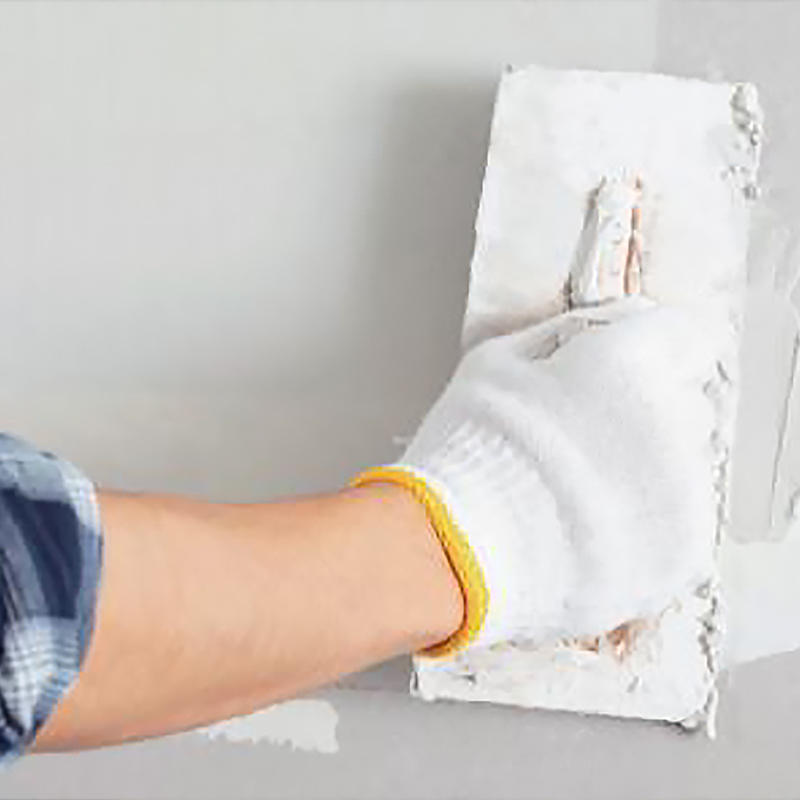
HPMC For Wall Putty formulations relies on the cellulose ether to keep the putty workable for a longer period after mixing, which reduces visible joint lines and trowel marks on finished walls. Water retention also plays a role in preventing the putty layer from drying too quickly, which can cause shrinkage cracks, especially in hot or dry climates. A medium to high viscosity HPMC is generally preferred for putty because it provides a smooth, non-sticky feel during application.
For plastering mortar applied with a trowel or by spray machine, HPMC contributes to anti-sagging behavior, meaning the wet plaster stays in place on vertical or overhead surfaces without slumping. This is particularly important for thicker plaster layers, where unmodified mortar would otherwise tend to slide or sag before it sets. In both putty and plastering applications, the cellulose ether also acts as a lubricant during mixing and application, which reduces friction against tools and substrates and gives a smoother surface finish.
- Improved workability allows longer trowel time without the mortar stiffening
- Reduced shrinkage cracking due to controlled water loss during curing
- Better adhesion to substrates such as concrete, brick, and aerated block
- Smoother surface finish with fewer visible application marks
HPMC For Self Leveling Mortar Systems
HPMC For Self Leveling Mortar applications generally calls for a lower viscosity grade compared to tile adhesive or putty. Self-leveling compounds are designed to flow under their own weight to create a flat, smooth floor surface, so excessive thickening from HPMC would interfere with that flow. Even so, a small amount of HPMC is still beneficial because it helps prevent segregation of the mix, meaning the heavier aggregate particles do not separate from the cement paste while the mortar is spreading.
In self-leveling systems, HPMC also contributes a degree of water retention, which supports proper hydration of the cement at the surface layer. This can help reduce surface dusting and improve the hardness of the finished floor once it cures. Because self-leveling mortar is often pumped through hoses during application, the chosen HPMC grade also needs to dissolve quickly and consistently to avoid lumps that could clog pumping equipment.
Hydroxypropyl Methyl Cellulose for Adhesive Formulations Beyond Tiles
While tile adhesive is one of the most common uses, Hydroxypropyl methyl cellulose for adhesive applications also extends to other bonding tasks within the building envelope, including the bonding of insulation boards in external wall insulation systems, the fixing of decorative panels, and certain gypsum-based bonding compounds. In each case, the underlying mechanism is similar: HPMC improves the consistency of the wet adhesive, slows water loss so the bond has time to develop, and helps the adhesive resist slipping before it sets.
When HPMC is used broadly as Hydroxypropyl methyl cellulose for building material production, manufacturers often test multiple grades against their specific raw materials, since local cement types, sand gradation, and climate conditions can all influence how a given grade performs. This is one reason why working with a supplier that offers technical support and multiple viscosity options can simplify the formulation process for new production lines.
Choosing an HPMC Manufacturer in China
When evaluating an HPMC Manufacturer China based supplier, several factors are worth reviewing beyond the basic product specification sheet. Consistency between production batches is important, since variations in viscosity or particle size from batch to batch can require formulators to repeatedly adjust their recipes. A manufacturer with an established quality management system and in-house testing equipment is generally better positioned to maintain that consistency.
EASONZELL™ MP hydroxypropyl methylcellulose is produced by Zhejiang Yisheng New Material Co., Ltd., a company located in the Shangyu Economic and Technological Development Zone within the Hangzhou Bay National Industrial Park. The company operates with an annual production capacity of 15,000 tons of cellulose ether products, covering HPMC, HEC (hydroxyethylcellulose), and HEMC (hydroxyethyl methylcellulose). This range allows the company to support customers across construction materials, industrial coatings, ceramics, ink printing, oil field applications, cosmetics, and personal care formulations.
In construction specifically, EASONZELL™ MP HPMC functions as a water-retaining agent and retarder for cement mortar, which improves mortar pumpability and helps maintain consistent quality during machine application. It is also formulated to serve as an adhesive component in plastering compounds, gypsum products, and putty powder, where it improves coating properties and extends operational time. Additionally, it supports the bonding of ceramic tiles, marble, and plastic decorative elements, while contributing to a reduction in the overall cement content needed in certain formulations.
| Item | Details |
|---|---|
| Company | Zhejiang Yisheng New Material Co., Ltd. |
| Location | Shangyu Economic and Technological Development Zone, Hangzhou Bay National Industrial Park |
| Annual Capacity | 15,000 tons of cellulose ether |
| Product Range | HPMC, HEC, HEMC |
| Core Focus | Safety, environmental protection, sustainable development |
Environmental and Handling Considerations
HPMC is a cellulose-derived, non-ionic polymer, which means it does not carry an electrical charge and is generally compatible with a wide range of cement, gypsum, and lime-based systems. Because it is water soluble, HPMC powder dissolves into mixing water during mortar preparation rather than remaining as a separate particle in the cured material. From a handling perspective, HPMC powder should be stored in a dry environment, since it is hygroscopic and can absorb moisture from the air, which may affect its dissolution behavior if exposed for long periods.
Manufacturers focused on sustainable production, such as those operating green and environmentally aware processes, often emphasize controlled effluent treatment, energy efficient drying systems, and orderly production management as part of their operational approach. For buyers evaluating Hydroxypropyl Methyl Cellulose For Mortar suppliers, asking about these production practices, alongside standard technical data sheets, can provide a more complete picture of a supplier's overall quality approach.
Frequently Asked Questions
Q1: What is Hydroxypropyl Methyl Cellulose (HPMC)?HPMC is a non-ionic cellulose ether made from purified cellulose through a chemical etherification process. It is water soluble and is widely used as a thickener, binder, and water retention agent in construction and other industries. |
Q2: What is HPMC used for in construction?HPMC is used in tile adhesives, wall putty, plastering mortar, self-leveling mortar, and external insulation systems. It improves water retention, workability, open time, and resistance to sagging during application. |
Q3: Is HPMC soluble in water?Yes, HPMC dissolves in cold water to form a clear to slightly hazy viscous solution. The dissolution rate depends on particle size and the degree of surface modification applied during manufacturing. |
Q4: How is HPMC manufactured?HPMC is produced by reacting alkali-treated cellulose with propylene oxide and methyl chloride under controlled conditions, followed by washing, drying, and milling into a fine powder of a specific viscosity grade. |
Q5: Is HPMC environmentally friendly?HPMC is derived from cellulose, a renewable plant-based raw material, and is widely used in formulations where reducing other chemical additives is a goal. Production practices such as effluent treatment and controlled emissions also play a role in the overall environmental profile of a given manufacturer. |
Q6: What dosage of HPMC is recommended for tile adhesive?A common starting range for tile adhesive is between 0.3 and 0.4 percent by weight of cement, using a high viscosity grade. The exact dosage should be confirmed through trial mixes with the specific raw materials in use. |
Q7: Can HPMC be used in self-leveling mortar?Yes, a lower viscosity HPMC grade is typically used in self-leveling mortar at a reduced dosage, generally between 0.1 and 0.2 percent, to support flow consistency without interfering with the self-leveling action. |
Q8: How does viscosity affect HPMC performance?Higher viscosity grades generally provide stronger water retention, thickening, and sag resistance, while lower viscosity grades dissolve faster and support better flow. Selecting the right grade depends on the specific mortar application. |
 Email: sarah@ys-cellulose.com
 Phone: +86-18067879812 / +86-575-82966958


