


 简体中文
 English
 русский
 عربى
 Español

A purchasing manager compares two quotes for the same 200 m² floor: sixty bags of C2TE tile adhesive, or four tonnes of sand-cement mortar mixed on site. The cost per square metre looks similar. The risk profile does not. That gap is what the "tile adhesive vs mortar" question is really about.
Short answer: they are different product categories. A modern tile adhesive is a factory-blended, polymer-modified cementitious powder designed for thin beds of roughly 3–6 mm. Site-mixed cement-sand mortar is an unclassified blend of cement, sand and water, applied in beds of 15–30 mm. Use adhesive when the substrate is flat and the tile is large, dense or exposed. Use mortar when you genuinely need thickness, or when the bed itself is doing structural work.
Content
- 1 Why One Word Covers Two Different Products
- 2 The Difference Is Mix Design, Not the Cement
- 3 Head-to-Head: Where the Two Systems Actually Differ
- 4 What Each Method Consumes Per Square Metre
- 5 What the Thin-Bed Build-Up Looks Like
- 6 When Traditional Cement-Sand Mortar Still Makes Sense
- 7 When Thin-Bed Tile Adhesive Is the Defensible Choice
- 8 What Makes a Tile Adhesive Work
- 9 A Buyer's Checklist Before You Compare Prices
- 10 Failure Modes and What They Point To
- 11 Frequently Asked Questions
- 11.1 Q1. Is tile adhesive the same as mortar?
- 11.2 Q2. Can I use tile adhesive instead of cement mortar for floor tiles?
- 11.3 Q3. Which is stronger, tile adhesive or cement mortar?
- 11.4 Q4. What is thinset mortar used for?
- 11.5 Q5. Can tile adhesive be used for large-format tiles?
- 11.6 Q6. How much tile adhesive do I need per square metre?
Why One Word Covers Two Different Products
Most of the confusion is linguistic. In North America, "thinset mortar" is the trade name for exactly the product Europeans and Asians call tile adhesive. In the same conversation, "mortar" can also mean a wheelbarrow of cement and sand. Both usages are correct, and they describe opposite ends of the specification.
| Term you will see | What it actually is | Typical bed | Governed by |
|---|---|---|---|
| Thinset mortar (US) / tile adhesive (EU, Asia) | Factory-blended cementitious powder with polymers and cellulose ether | 3–6 mm | ANSI A118.4 / A118.15; EN 12004 C1, C2 |
| Dry-set mortar | Unmodified or lightly modified thin-bed adhesive | 3–6 mm | ANSI A118.1 |
| Cement-sand mortar | Cement, sand and water proportioned on site | 15–30 mm | Project specification only |
| Mortar bed / mud bed | Thick semi-dry cement-sand bed, bonded or unbonded | 20–40 mm | TCNA methods, project specification |
The Difference Is Mix Design, Not the Cement
Both products start with Portland cement and graded sand. Everything that follows comes from how those ingredients are selected and what else goes into the bag.
- Aggregate grading. Thin-bed adhesives use sand graded to roughly 0–0.6 mm; general mortar uses 0–4 mm. The coarse fraction is what makes a 20 mm bed possible, and it is also why mortar cannot be troweled down to 3 mm.
- Redispersible polymer powder (RDP), typically 1–3% in a C2 adhesive. It forms a secondary polymer film that carries tensile stress across the cement matrix, which is where flexibility and adhesion to low-absorption porcelain come from.
- Cellulose ether (HPMC or HEMC), usually 0.2–0.5%. It holds the mixing water in the paste so the cement can hydrate instead of being sucked dry by the tile back.
- Starch ether and short fibres, often 0.03–0.1%, which control slip, sag and workability.
- Factory batching. Water demand, pot life and open time are fixed by the plant, bag after bag. On-site mortar varies with the sand delivered that morning.
Once you see the additive package, the question stops sounding like "which is better" and starts sounding like "which job". Formulating a tile adhesive formulation that still holds open time at 35 °C is a different engineering problem from making a mortar that will not shrink.
Head-to-Head: Where the Two Systems Actually Differ
Strip out the marketing and the comparison comes down to a handful of measurable points.
| Property | Thin-bed tile adhesive (C1 / C2) | Traditional cement-sand mortar |
|---|---|---|
| Typical bed thickness | 3–6 mm | 15–30 mm |
| Tensile adhesion class | C1 ≥ 0.5 N/mm²; C2 ≥ 1.0 N/mm² (EN 12004) | No classification; lower and highly variable |
| Deformation | S1 ≥ 2.5 mm, S2 ≥ 5 mm transverse deformation | Essentially rigid |
| Substrate flatness needed | Roughly 3 mm over 2 m for large-format work | Tolerates unevenness because the bed is thick |
| Open time | 20–30 minutes, defined on the datasheet | Minutes; depends on the mason and the weather |
| Water retention | Controlled by cellulose ether | Poor; tile suction can starve the cement |
| Batch consistency | Every bag identical | Every batch different |
What Each Method Consumes Per Square Metre
Consumption follows directly from bed thickness. At a typical bulk density of about 1.5 kg/L for a cementitious adhesive and 1.8–2.0 kg/L for a sand-rich mortar, the difference is roughly sevenfold.
What the Thin-Bed Build-Up Looks Like
The reason thin-bed adhesive tolerates movement is that there is very little material to move. The adhesive layer bonds the tile almost directly to the substrate, so tile, adhesive and substrate behave as one composite. A 20 mm mortar bed sits between them as a separate, comparatively weak layer.
When Traditional Cement-Sand Mortar Still Makes Sense
Mortar is not obsolete. It is a different tool, and there are cases where it remains the correct answer.
- Building up thickness. A slab out of level by 20 mm or more cannot be corrected with adhesive without exceeding the manufacturer's maximum bed depth.
- Bonded and unbonded mortar beds. Methods built around a 20–40 mm bed, such as mud-set floors and heavy stone installations, are designed for mortar rather than adhesive.
- Very rough or irregular backgrounds. Rubble masonry and old brick absorb thickness that a thin-bed adhesive would simply slump off.
- Small, high-absorption tiles on flat walls in dry interiors, provided the substrate is wetted and the mix is not overdosed with water.
- Cost pressure with cheap local labour and materials, where the saving is real but is paid for with variability, slower curing and a much higher skill dependency.
When Thin-Bed Tile Adhesive Is the Defensible Choice
Adhesive stops being optional and becomes the lower-risk option in these situations.
- Large-format porcelain and low-absorption tiles, where mortar cannot develop enough bond.
- Exteriors, wet rooms, balconies and facades, where freeze-thaw and moisture cycling demand a deformable S1 or S2 adhesive.
- Underfloor heating, timber and other moving substrates.
- Tiling over existing tiles, where bed thickness has to stay minimal.
- Gypsum, cement board and other dimensionally sensitive substrates.
- Projects where per-bag consistency and traceability matter more than the cheapest possible bed.
What Makes a Tile Adhesive Work
A C2 tile adhesive is not cement with a bit of glue added. Three additive families do most of the work, and their dosage is what separates a C1 bag from a C2TE bag.
Water retention: cellulose ether
HPMC and HEMC are the reason a freshly combed adhesive still wets a tile back twenty minutes later. Without them, the tile's suction pulls the mixing water out of the paste before the cement has hydrated, and the joint fails at the interface rather than inside the adhesive. Typical dosages sit between 0.2% and 0.5%, with the viscosity grade chosen for the application: higher viscosity for anti-sag, lower viscosity for extended open time. For tile adhesive work, an architectural-grade product such as the EASONZELL MP series is the usual starting point.
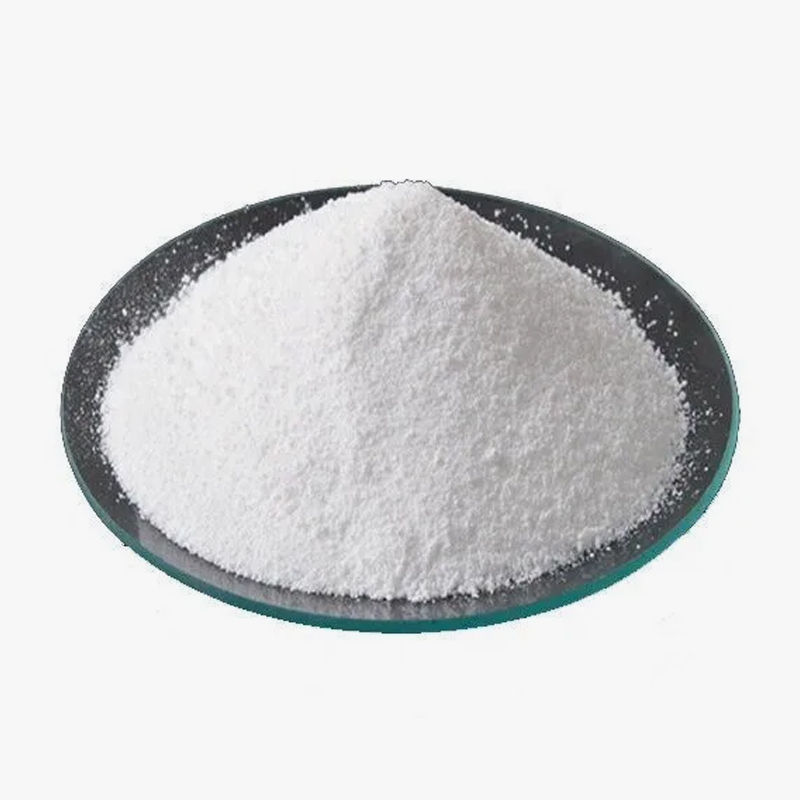 EASONZELL MP Series Architectural Grade HPMC for Mortars and AdhesivesHPMC grade for cement mortars and tile adhesives, offering water retention, workability, and viscosity options from MP 400 to MP 200H.View Product →
Adhesion and flexibility: redispersible polymer powder
RDP is what turns a rigid cement film into a slightly deformable one. It is also the largest single cost item in a C2 formulation, which is why a 1% version and a 3% version of "the same" adhesive can differ by a factor of two in field performance. Higher RDP content buys tensile adhesion after heat ageing and freeze-thaw cycling, and improves deformation toward class S1.
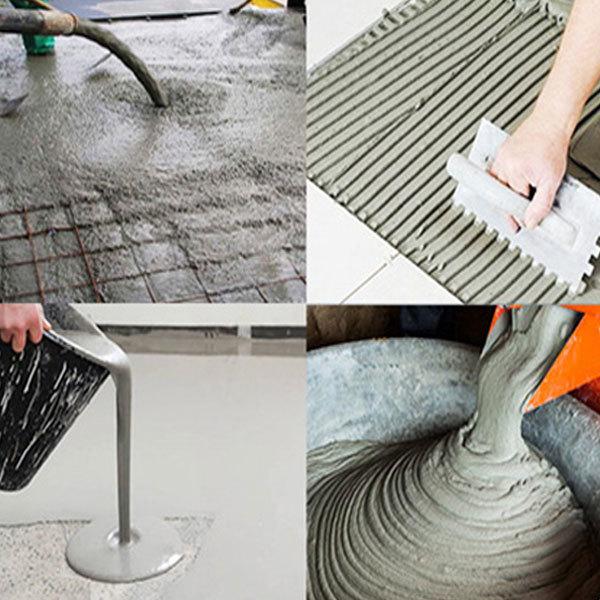 Resin Dispersible Powder RDP for Tile Adhesives and MortarsRedispersible polymer powder that improves flexibility, adhesion, water resistance, and crack resistance in tile adhesives, putty, EIFS, and self-leveling mortars.View Product →
Workability and sag resistance: starch ether and fibres
Starch ether and short fibres control how the adhesive behaves between the trowel and the tile. They reduce slip on vertical surfaces and help the ridges hold their shape long enough to be flattened. HEMC grades made for building materials are often used here because they combine water retention with a lighter, more thixotropic rheology.
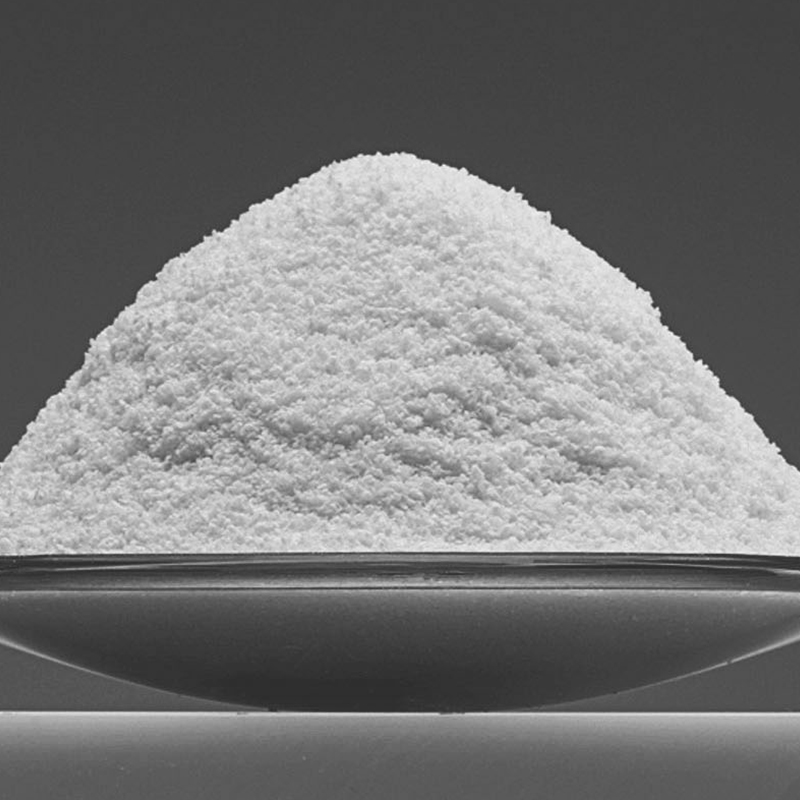 EASONZELL ME Series Building Material Grade HEMC Cellulose EtherHEMC powder for cement, gypsum, and lime systems, providing water retention, thickening, adhesion, and salt compatibility across multiple viscosity grades.View Product →
A Buyer's Checklist Before You Compare Prices
Price per bag is the least useful number in this comparison. Convert every quote to cost per square metre and check these points first.
- Confirm the standard and class you actually need: EN 12004 C1 or C2, plus the T (slip) and E (extended open time) suffixes, or the ANSI A118 equivalent.
- Calculate consumption from bed thickness, not from the number of bags the last contractor used.
- Check the substrate flatness tolerance the adhesive requires. If the slab is outside it, budget for levelling compound instead of extra adhesive.
- Match the adhesive class to tile size and absorption. Large-format, low-absorption porcelain generally needs C2 and a full-coverage technique.
- Verify the maximum bed thickness on the datasheet; most thin-bed adhesives have a hard limit.
- Ask for ageing data: tensile strength after heat ageing and freeze-thaw, not only the 28-day dry value.
The same logic applies on the manufacturing side. Buyers who specify cellulose ether by application rather than by price tend to field fewer complaints from site; this HPMC buying guide for tile adhesive manufacturers is a practical starting point.
Failure Modes and What They Point To
- Tile debonds with a clean back. Usually water loss before hydration: too little cellulose ether, too absorbent a tile, or an unprimed substrate.
- Adhesive still soft under the tile weeks later. Typically too much mixing water, or a bed far thicker than the adhesive was designed for.
- Cracks along grout lines on a heated floor. Often insufficient deformation, meaning no S1 or S2 classification, or missing movement joints.
- Tiles slipping down a wall. A slip-resistance problem: rebalance the starch ether and fibre content or the cellulose ether viscosity grade.
- Mortar bed crumbling at 20 mm. Almost always a site-mix issue: too much water, poor sand grading, or cement content guessed rather than batched.
Frequently Asked Questions
Q1. Is tile adhesive the same as mortar?
No. Tile adhesive is a factory-made, polymer-modified powder for 3–6 mm beds. "Mortar" can mean thinset mortar, which is the same thing, or site-mixed cement and sand for 15–30 mm beds. Always check which one the specification means.
Q2. Can I use tile adhesive instead of cement mortar for floor tiles?
On a flat floor, yes, and it is usually the better choice. On a floor out of level by more than the adhesive's maximum bed depth, no. Level the slab first, or specify a mortar bed.
Q3. Which is stronger, tile adhesive or cement mortar?
In tensile adhesion, tile adhesive. EN 12004 requires C1 adhesives to reach at least 0.5 N/mm² and C2 at least 1.0 N/mm², while unmodified cement-sand mortar carries no such classification and bonds far less predictably.
Q4. What is thinset mortar used for?
Thinset mortar is the North American term for thin-bed tile adhesive. It is used for ceramic, porcelain, stone and mosaics on floors and walls, including wet areas when the correct class and coverage are used.
Q5. Can tile adhesive be used for large-format tiles?
Yes, but choose a C2 class adhesive with good deformation, use a large-notch trowel and back-butter the tiles. Large-format, low-absorption porcelain needs high polymer content to develop bond.
Q6. How much tile adhesive do I need per square metre?
Roughly 4–5 kg/m² for a 3 mm bed and 8–14 kg/m² for a 6–10 mm bed, depending on trowel notch and substrate flatness. A 20 mm mortar bed needs about 30–40 kg/m².


 Email: sarah@ys-cellulose.com
 Phone: +86-18067879812 / +86-575-82966958


