


 简体中文
简体中文 English
 русский
 عربى
عربى Español
A dry-mix producer swaps one cellulose ether grade for a cheaper alternative, keeps the same dosing, and the tile adhesive that passed every bench test starts to slide off the trowel on site a week later. Nothing about the cement changed. What changed was how long the mix held its water.
Cement formulation is the work of deciding what goes into a cement-based mix, in what order of magnitude, and why. The conclusion first: the binder sets the performance ceiling of a mortar, render, grout or adhesive, but water retention, particle grading and the additive package decide how close you actually get to that ceiling. Get the water balance wrong, and no extra cement will rescue the mix.
Content
- 1 What a Cement Formulation Is Made Of
- 2 Water Retention Is the Variable That Decides Most Outcomes
- 3 Matching the Ether Type to the Cement System
- 4 RDP and the Adhesion Half of the Formulation
- 5 Failures That Point Straight Back to the Formulation
- 6 A Practical Workflow From Specification to Trial Batch
- 7 Sourcing Checks Before You Commit to a Grade
- 8 Cement Formulation: Frequently Asked Questions
- 8.1 Q1. What is cement formulation?
- 8.2 Q2. How much HPMC is used in cement mortar?
- 8.3 Q3. What is the difference between HEC and HPMC in cement?
- 8.4 Q4. Why does cement mortar crack or dry out too fast?
- 8.5 Q5. What does RDP do in a tile adhesive formulation?
- 8.6 Q6. How do I test a new cement formulation before scaling up?
What a Cement Formulation Is Made Of
A cement-based dry mix is built from four groups of ingredients: binder, filler or aggregate, mixing water, and functional additives dosed in very small amounts. The binder is usually ordinary Portland cement (CEM I under EN 197-1) or a blended cement, sometimes combined with gypsum, hydrated lime or calcium aluminate where setting behaviour has to be adjusted. Fillers such as silica sand, limestone powder or lightweight aggregate fill the volume and set the grading curve.
Additives are where one formulation separates from another, and they are dosed in grams per kilogram rather than as a share of the whole. The ranges in Table 1 reflect common dry-mix practice; treat them as starting windows, because the target standard, the local sand grading and the water demand of the binder all shift the numbers.
| Component | Typical role | Broad loading range |
|---|---|---|
| Portland or blended cement | Binder, strength development, set | 15–40% in mortars and adhesives |
| Sand, limestone powder, lightweight filler | Grading, volume, shrinkage control | Balance of the mix |
| Cellulose ether (HEC, HEMC, HPMC) | Water retention, workability, adhesion build | 0.02–0.5% |
| Starch ether (HPS) | Extra water retention, sag resistance | 0.01–0.05% |
| Redispersible polymer powder | Adhesion, flexibility, water resistance | 1–4% |
| Retarder or accelerator | Open time or early strength | 0.05–0.3% |
| Defoamer, fibre, superplasticiser | Air control, crack control, flow | 0.05–0.5% |
Water Retention Is the Variable That Decides Most Outcomes
Cement needs roughly 0.40 to 0.42 parts water per part cement by mass to hydrate its clinker phases fully. Practical mortars are mixed at 0.40 to 0.55 because workability demands it, so a large share of the mixing water is pore water that is never chemically bound. Pore water leaves in three ways: suction into the substrate, evaporation from the surface, and bleeding towards the top of the layer.
When water leaves faster than the cement consumes it, the outcome is predictable: incomplete hydration, weak surface layers, shrinkage cracks, and adhesive that passes a dry lab test but fails after a hot afternoon on site.
This is the central job of cellulose ether in a cement system. The molecules adsorb onto cement particles and raise the viscosity of the pore solution, slowing water movement, while the film they form holds water inside the fresh mortar. Water retention can be measured directly with the filter-paper method described in EN 1015-8, and it is worth running on every new ether grade instead of trusting a datasheet alone.
Chart note: this is a directional illustration of common behaviour, not measured test data. The real curve depends on the ether grade, its viscosity and the rest of the mix.
Matching the Ether Type to the Cement System
Four ethers dominate cement-based dry mixes: HEC, HEMC, HPMC and HPS. They are not interchangeable, because the substituent groups decide how the molecule behaves in water, at what temperature it gels, and how much air it drags into the mix.
HPMC and HEMC are the workhorses of cement and gypsum mortars. Both deliver strong water retention, and both show thermal gelation in water at roughly 55 to 70 °C, which is why hot-climate workability has to be tested rather than assumed. HEMC generally entrains less air than HPMC, which matters when a dense repair mortar is the target. HEC offers good water retention with lower thickening and low air entrainment, which suits water-based coatings and drilling fluids more than thick-bed mortars.
HPS is a starch ether rather than a cellulose ether: it adds water retention and pronounced sag resistance at modest cost, and is often used alongside a cellulose ether to balance performance against price. Viscosity, quoted for a 2% solution at 20 °C, matters as much as chemistry. Grades in the 40,000 to 75,000 mPa·s range are widely used in tile adhesives, while lower-viscosity grades around 4,000 to 15,000 mPa·s are common in self-levelling compounds where the mix still has to flow. Treat these as broad guides and confirm the actual window with your supplier.
| Ether | Water retention | Thickening | Air entrainment | Where it fits in cement systems |
|---|---|---|---|---|
| HPMC | High | High | Moderate to high | Tile adhesive, wall putty, self-levelling compound |
| HEMC | High | Medium to high | Lower than HPMC | Tile adhesive, render, gypsum plaster, repair mortar |
| HEC | Good | Medium | Low | Water-based coatings, drilling fluids, selected cement systems |
| HPS | Boosts retention | Strong | Low | Paired with cellulose ether for sag resistance and cost balance |
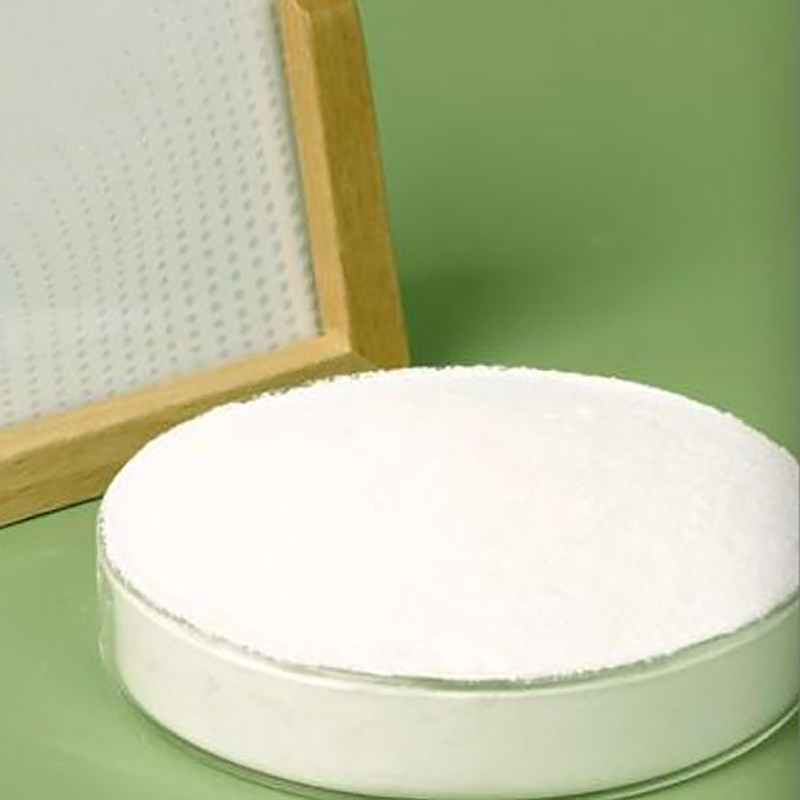
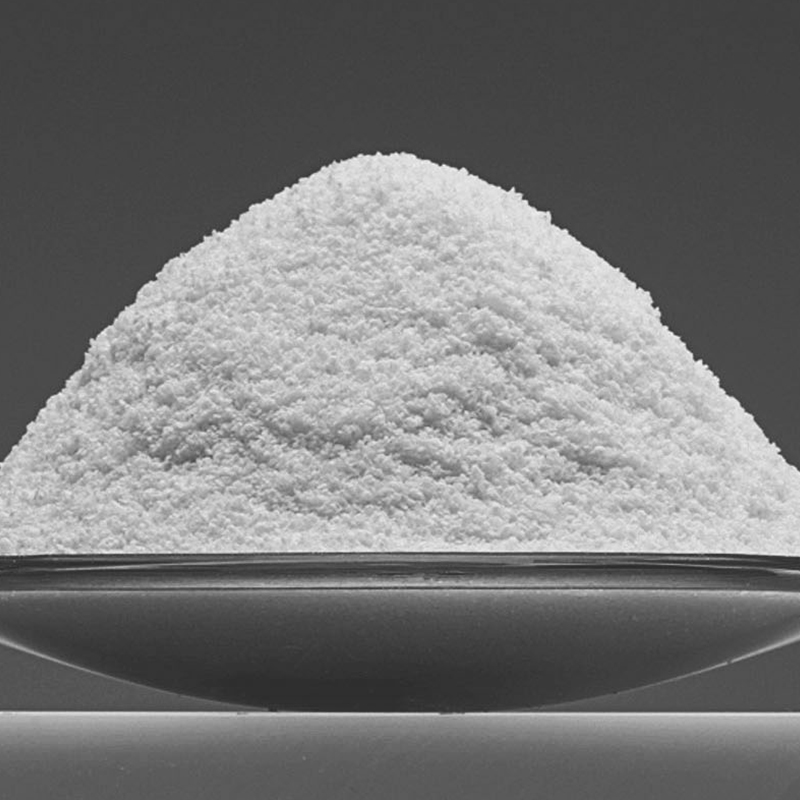 EASONZELL™ ME Series* Building Material GradeEASONZELL™ ME Hydroxyethyl Methyl Cellulose (HEMC) is a colorless and odorless powder or granule, readily soluble in both hot and cold water, yielding a clear and visc...View Product →
RDP and the Adhesion Half of the Formulation
Redispersible polymer powder is the second additive that separates a basic cement mortar from a specification-grade adhesive. Spray-dried from a polymer dispersion, it redisperses in the mixing water and forms a polymer film as the mortar dries, bridging the interface between cement hydrates and aggregate.
In practice, that film turns brittle adhesion into tensile and shear strength that survives water immersion and heat ageing, which is the difference between a C1 and a C2 classification under EN 12004. Typical additions in tile adhesives sit between about 1% and 4% of the dry mix. Below that the film is not continuous; well above it, cost rises faster than measurable performance.
Most plants treat RDP and cellulose ether as one package rather than two separate purchases, because both control how the fresh mix behaves. The ways these components are combined across renders, grouts and levelling compounds are covered in this guide to dry-mix mortar additives.
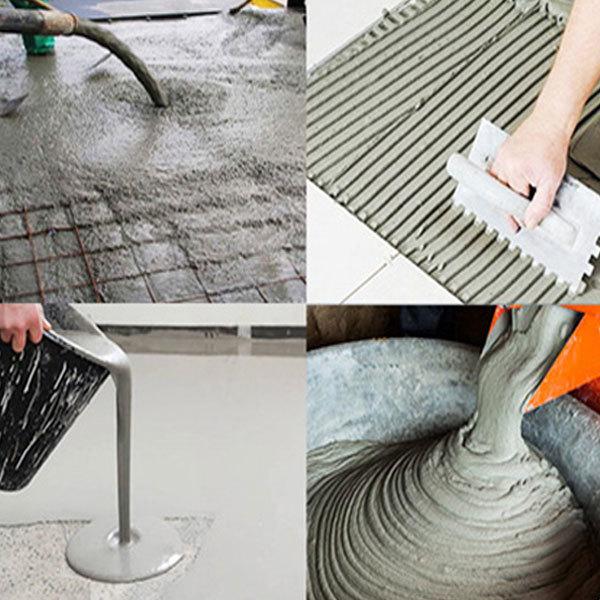 Resin Dispersible Powder (RDP)Resin Dispersible Powder (RDP) is a high-performance building material additive widely used in mortars, coatings, adhesives, and other products, providing significant ...View Product →
Failures That Point Straight Back to the Formulation
Most field complaints trace back to a handful of formulation choices. The symptom usually points to the cause.
- Sagging or slip on a vertical substrate: open time is too short or the mix lacks thixotropy. Raise the cellulose ether or add HPS rather than adding more water.
- Fine cracking in thin layers: water is leaving faster than the binder can hydrate. Check ether dosage, filler grading and substrate suction.
- Weak adhesion after water immersion: RDP is too low for the exposure class, or cement content has been cut too far.
- Lumps when powder meets water: the ether is not dispersing. Review particle size, mixing order and shear.
- Pinholes and a porous surface: air entrainment is too high. Reduce the ether dose or add a defoamer.
- Efflorescence on the finished surface: water is migrating through the layer. Improve water retention and control site water addition.
A Practical Workflow From Specification to Trial Batch
- Fix the standard and the test list before touching the recipe: EN 998-1 or EN 998-2 for renders and masonry mortars, EN 12004 for tile adhesives, plus the corresponding adhesion and water-retention methods.
- Set water demand by trial, not by copying another supplier's number. Consistency in the bucket has to match the trowel or pump that will place the mix.
- Build the grading curve from locally available sand or filler first, because grading sets water demand and shrinkage more than any additive can.
- Dose the cellulose ether to reach the water retention you need, then re-check open time before reaching for a retarder.
- Dose RDP against the exposure class, and verify adhesion after water immersion and heat ageing.
- Add secondary components one at a time, so every change can be traced if a result moves.
- Run the plant trial with production sand and production mixing equipment; a laboratory mixer and a plant mixer never agree perfectly.
When the target is a deformable thin-bed adhesive, grade selection examples and dosing logic are set out in this overview of HPMC for tile adhesives.
Sourcing Checks Before You Commit to a Grade
Switching ether suppliers is a formulation change, not a procurement detail. Before committing, ask for a technical data sheet, a safety data sheet and a certificate of analysis for the actual batch, then compare substitution type and degree, viscosity, moisture content and particle size against the grade you are replacing.
- Batch-to-batch variation in viscosity and moisture, not just the certificate average.
- Consistency of the substitution pattern between shipments, especially for HEMC and HPMC.
- Packaging integrity and shelf life, since cellulose ethers are hygroscopic and take up moisture in humid stores.
- Storage discipline on site: dry, ventilated, first in, first out.
- Whether the supplier manufactures the ether itself or trades it, because that decides how quickly a deviation can be investigated.
A producer such as Zhejiang Yisheng New Material states an annual cellulose ether capacity of 15,000 tonnes and grades its EASONZELL range by end use, which helps when one plant runs tile adhesive, putty and self-levelling compound on the same line.
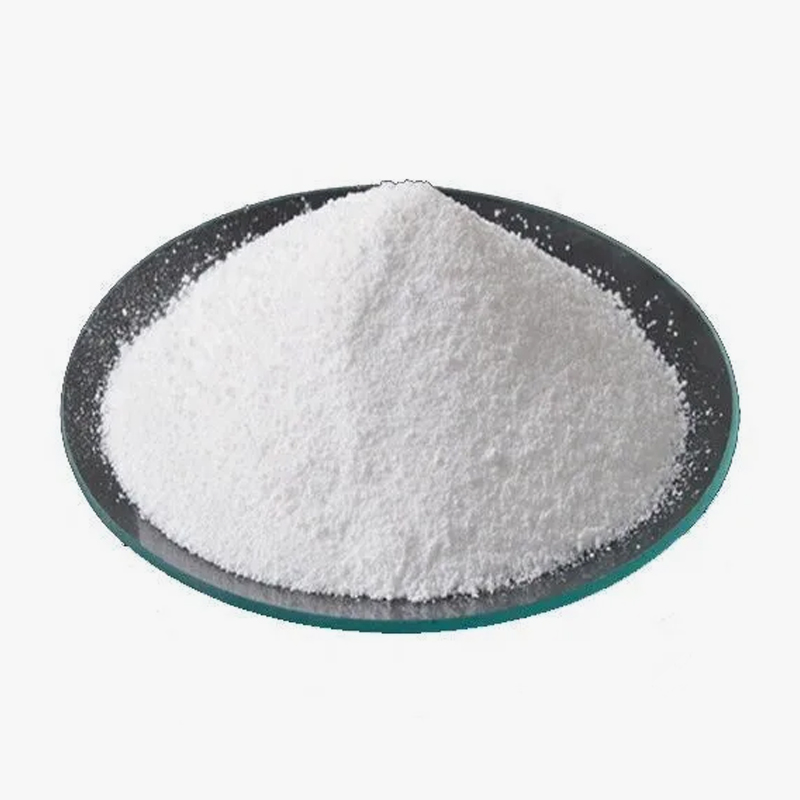 EASONZELL™ MP Series* Architectural GradeEASONZELL™ MP hydroxypropyl methylcellulose (HPMC) is a versatile non-ionic cellulose ether polymer that finds extensive applications across various industries includi...View Product →
Cement Formulation: Frequently Asked Questions
Q1. What is cement formulation?
Cement formulation is the design of a cement-based mix, covering binder, filler, water and additives, to meet a defined performance standard. In dry-mix products the additives are dosed at fractions of a percent, yet they control water retention, open time and adhesion.
Q2. How much HPMC is used in cement mortar?
Most cement mortars and tile adhesives use roughly 0.02% to 0.5% cellulose ether by dry weight, with thick-bed masonry mortars at the low end and thin-bed adhesives at the high end. Always confirm the dose by testing water retention and open time in your own mix.
Q3. What is the difference between HEC and HPMC in cement?
HPMC gels in warm water and entrains more air, which suits mortars that need strong water retention and workability. HEC is more tolerant at higher temperatures and adds less air, which is why it dominates water-based coatings and oilfield fluids.
Q4. Why does cement mortar crack or dry out too fast?
Fast water loss through substrate suction or evaporation is the usual cause. Raising water retention with the right cellulose ether, adjusting filler grading and controlling site water addition solve more cracking cases than adding cement does.
Q5. What does RDP do in a tile adhesive formulation?
RDP forms a polymer film that bridges cement hydrates and aggregate, producing adhesion that survives water immersion and heat ageing. It is the main lever for moving a formulation from C1 to C2 under EN 12004.
Q6. How do I test a new cement formulation before scaling up?
Start with water retention using EN 1015-8, then check adhesion, open time and slip against the product standard. Repeat the key tests after heat ageing and water immersion, and finish with a plant trial using production sand and mixing equipment.



 Email: sarah@ys-cellulose.com
 Phone: +86-18067879812 / +86-575-82966958


