


 简体中文
 English
 русский
 عربى
 Español

Two batches of the same interior matt white, produced from the same acrylic binder and the same pigment loading, can behave like two different paints: one brushes out flat and stays where it is put, the other slides down a vertical panel within a few minutes. In most of the cases we see on the production floor, the difference is not the resin. It sits in a 25 kg bag of hydroxyethyl cellulose: which viscosity grade was chosen, how much was dosed, and whether the powder was fully hydrated before it met the pigment slurry.
The short answer comes first. In a water-based emulsion paint, HEC is the workhorse thickener of the continuous aqueous phase. It builds in-can viscosity, keeps pigment and filler suspended, holds water in the film long enough to level, and gives the paint a shear-thinning flow so it sprays and brushes easily but resists sagging after application. Nail the grade, the dose and the dissolving step, and a surprising number of "binder problems" simply disappear.
Content
- 1 What HEC Actually Does Inside an Emulsion Paint
- 2 Rheology: Why HEC Beats Some Thickeners at Low Shear and Loses at High Shear
- 3 Specifying the Grade: What to Put on the Purchase Order
- 4 Dosage: Start From These Ranges, Then Bracket
- 5 Dissolving HEC Without Lumps
- 6 Troubleshooting the Most Common Symptoms
- 7 Purchasing and Incoming Quality Control
- 8 Storage and Handling Basics
- 9 Frequently Asked Questions About HEC for Emulsion Paint
- 9.1 Q1: What does HEC do in emulsion paint?
- 9.2 Q2: What is the typical dosage of HEC in latex paint?
- 9.3 Q3: How do I dissolve HEC without lumps?
- 9.4 Q4: Which HEC viscosity grade suits interior wall paint?
- 9.5 Q5: Is HEC better than HPMC for water-based paint?
- 9.6 Q6: Why does HEC-thickened paint lose viscosity in storage?
What HEC Actually Does Inside an Emulsion Paint
HEC is a nonionic cellulose ether made by reacting alkali cellulose with ethylene oxide. Unlike acrylic thickeners, it does not need neutralisation to thicken, and it tolerates the pH shifts and electrolyte load that come with typical paint raw materials. Dissolved in the water phase, the polymer chains hydrate and uncoil, raising viscosity and forming a loose three-dimensional network around the dispersed phases.
- Thickening: raises in-can and application viscosity without changing pigment volume concentration.
- Suspension: slows settling of dense fillers such as calcium carbonate and barytes during storage.
- Water retention: limits water loss into porous substrates, which protects film formation on exterior masonry and renders.
- Rheology control: creates the pseudoplastic profile that separates good brushing from sagging.
- Emulsion stabilisation: reduces creaming and helps keep the binder droplets evenly distributed.
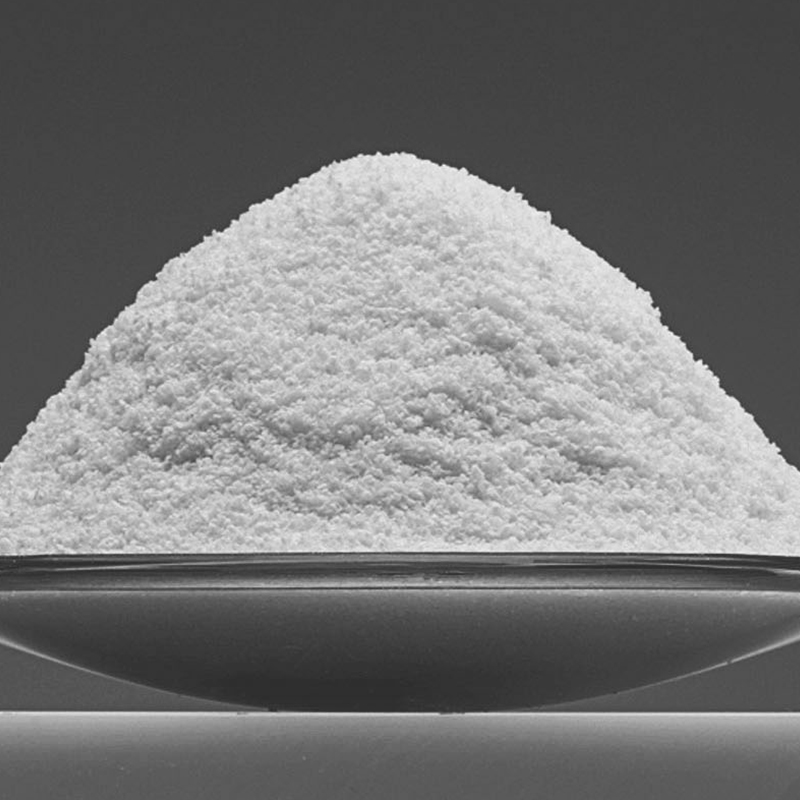
How the network looks at the microscopic level
Rheology: Why HEC Beats Some Thickeners at Low Shear and Loses at High Shear
Paint is applied across a very wide shear range. Sitting in the can, it sees almost no shear and must hold filler in suspension; on a brush or roller it sees high shear and must flow easily. HEC delivers a steep viscosity curve between those two states, which is exactly what you want for sag resistance and pigment suspension.
That curve explains the classic trade-off. HEC gives excellent anti-settling and sag control at a low cost per kilo, but if the dose is pushed too high to fix a settling problem, high-shear viscosity climbs with it and the painter complains about brush drag, roller spatter and poor leveling. Many formulators therefore run a hybrid: HEC for the low-shear structure and a smaller amount of an associative thickener to shape the high-shear end. Understanding the full emulsion paint thickening system before you lock a formula saves months of rework.
Specifying the Grade: What to Put on the Purchase Order
"HEC" on its own is not a specification. Two powders with the same name can differ by a factor of ten in solution viscosity, and by their degree of substitution, moisture and insoluble content. For paint use, write the following into the specification and confirm every batch against the certificate of analysis.
| Parameter | What to specify | Effect on the paint |
|---|---|---|
| 1% solution viscosity, 25 °C | One nominal grade with an agreed tolerance band | Sets in-can viscosity at a given dose; changing grade mid-project forces a reformulation |
| Degree of substitution | Commonly around 2.0–2.5 hydroxyethyl groups per anhydroglucose unit | Higher substitution improves water solubility and electrolyte tolerance but can raise film water sensitivity |
| Moisture content | Usually 5% or below | Wet powder weighs heavy, so a fixed dose silently under-thickens |
| Insoluble residue | Low, checked per batch | Grit, fish eyes and filter or sieve blockage in the mill |
| Particle size and hydration speed | Fine, fast-hydrating grade for slurry addition | Lump formation and long hydration times that throttle output |
| Solution clarity | Clear to slightly hazy | A visible indicator of undissolved fibre, which matters for gloss and clear systems |
For water-based coatings the grade choice is narrower than the market suggests: you need a product designed for the water phase of a paint, not an oilfield or construction grade. A dedicated
Dosage: Start From These Ranges, Then Bracket
HEC is used at low addition levels, typically a few tenths of a percent on total formula weight. The figure below shows indicative ranges used in common paint types. Treat them as a starting ladder, not a recipe: binder type, pigment volume concentration and the target viscosity all move the number.
Running the ladder properly
- Prepare a master batch without thickener and split it into five samples.
- Dose HEC at 0.20%, 0.30%, 0.40%, 0.50% and 0.60% on total weight, hydrating each sample identically.
- Measure Stormer or KU viscosity at 25 °C after 24 hours, not immediately, so hydration is complete.
- Check sag resistance on a vertical panel and leveling on a sealed drawdown.
- Heat-age the best two samples for two weeks at 50 °C and re-measure to expose viscosity drift.
Dissolving HEC Without Lumps
Almost every HEC complaint in a paint plant traces back to the addition step. Dry HEC particles swell on contact with water and form a skin; once that skin closes, water can no longer reach the core and you get gel lumps that survive milling. There are three reliable routes.
- Direct addition to the let-down. Add the powder slowly into water under good vortex agitation, before pigments, and continue mixing until fully hydrated. Fast and cheap, but the least forgiving of poor agitation.
- Stock solution. Prepare a 1.5–2% solution in a dedicated tank, hydrate it fully, then dose the solution into the batch. Best for repeatability and for small batch sizes.
- Slurry method. Wet the powder with a water-miscible carrier such as propylene glycol or a small amount of ethanol, then add the paste to water. This prevents skin formation entirely and is the safest route for high-viscosity grades.
- Add powder at a controlled rate, never as a single dump from the bag.
- Keep the mixer at a speed that creates a visible vortex but does not whip air.
- Check pH and temperature before addition; very warm water shortens hydration time but can also accelerate viscosity drift.
- Do not add HEC after pigments have been dispersed at high speed unless a stock solution is used.
If you already see the viscosity fall away after a few weeks in the can, the cause is usually hydration quality or biological attack rather than the grade; the practical checks are covered in this note on viscosity drift in HEC-thickened paint.
Troubleshooting the Most Common Symptoms
| Symptom | Likely cause | Practical fix |
|---|---|---|
| Fish eyes or grit in the mill base | Powder added too fast or into a high-solids slurry before hydration | Pre-wet in glycol, or dose as a 2% stock solution |
| Viscosity lower than the lab batch | Moisture pickup in the bag, or dosing not corrected to dry basis | Re-check certificate moisture and adjust the dose |
| Sagging on vertical surfaces | Too little low-shear structure | Raise the dose or move to a higher-viscosity grade |
| Brush drag, poor leveling | Excess low-shear structure from over-dosing | Reduce the dose and rebalance with an associative thickener |
| Viscosity drops after two to four weeks | Enzymatic or microbial attack, or pH drift | Review the preservative system and the pH window |
| Foam and air entrapment | High mixing shear during addition | Adjust defoamer and add the powder under gentler shear |
There is one case where HEC is not the first choice: formulations that need thermal gelation or very high water retention in a cementitious or gypsum system often perform better with a methyl-based ether. For coating-grade work, a hydroxyethyl methyl cellulose such as the
 EASONZELL ME Series Coating-Grade Hydroxyethyl Methyl CelluloseCoating-grade HEMC with thermal gelation and water retention, offered in multiple viscosity grades for comparison with HEC in cementitious or gypsum systems.View Product →
can be evaluated alongside HEC rather than as a straight swap.
Purchasing and Incoming Quality Control
HEC is a commodity with a wide quality spread, and the price difference between two bags rarely reflects the cost of a failed batch. Build the incoming check into your receiving routine rather than trusting the label.
- Measure 1% solution viscosity on every incoming lot and plot it against the certificate value.
- Check moisture before releasing the lot; a wet bag is an automatic under-dose.
- Run a small drawdown on a standard let-down to catch insoluble fibre early.
- Keep the supplier's batch number on file so a formula issue can be traced back in one step.
- Ask for an application report, not just a specification sheet, for any grade change.
A manufacturer that runs its own application lab can usually supply a viscosity grade matched to your binder and a recommended starting dose, which shortens the trial cycle considerably. That is the practical difference between buying a powder and buying a working formulation input.
Storage and Handling Basics
HEC is hygroscopic. Bags stored on a damp floor or left open in a humid warehouse gain weight, cake at the surface and lose viscosity in use. Keep pallets off the ground, reseal opened bags, and follow first-in-first-out so older stock is consumed before it hardens. Water-based paint manufacturers in humid climates should also verify that the storage area stays below the dew point swings that cause condensation inside the bag liner. Ask your supplier for the quoted shelf life and keep that date on the bag label, since the practical working life depends heavily on packaging and conditions.
Frequently Asked Questions About HEC for Emulsion Paint
Q1: What does HEC do in emulsion paint?
It thickens the water phase, keeps pigment and filler suspended, retains water in the film and gives the paint its shear-thinning flow, so it brushes easily but resists sagging after application.
Q2: What is the typical dosage of HEC in latex paint?
Most interior and exterior emulsions use roughly 0.2–0.6% on total formula weight. Texture and real-stone paints go higher. Always confirm the figure with a ladder trial on your own binder system.
Q3: How do I dissolve HEC without lumps?
Add the powder slowly into a vortex of water, or pre-wet it with propylene glycol before adding to water. A 1.5–2% stock solution gives the most repeatable result in production.
Q4: Which HEC viscosity grade suits interior wall paint?
Match the grade to your target KU viscosity and binder demand. A mid-range grade is the usual starting point; very high-viscosity grades tend to cause brush drag at practical dose levels.
Q5: Is HEC better than HPMC for water-based paint?
HEC dissolves more readily in cold water and is nonionic, which simplifies pH control. HPMC offers thermal gelation and stronger water retention, so the choice depends on the system, not on a general ranking.
Q6: Why does HEC-thickened paint lose viscosity in storage?
Usually incomplete hydration, moisture pickup in the powder, or enzymatic and microbial attack. Re-check the certificate moisture, the dissolving step and the preservative package before changing the grade.

 Email: sarah@ys-cellulose.com
 Phone: +86-18067879812 / +86-575-82966958


